
Reviewed · SAN DIEGO WHALE WATCHING
San Diego: 3 Hour Whale Watching Cruise
San Diego’s best whale watching usually comes with a bonus: dolphins by the hundreds. This three-hour cruise leaves Mission Bay for La Jolla Canyon, where you may see gray whales in winter, blue whales in summer, humpbacks, fin whales, sea lions, and seabirds. I like the stable two-deck boat and the crew’s steady effort to find wildlife. I also like the $34 price, which is modest for a three-hour outing.
The main drawback is simple: wild animals do not follow a schedule. You might see four whales, or only dolphins and birds. The boat can also feel bouncy, and one passenger found the sound system hard to hear from the back. If you are prone to seasickness, this may not be your best San Diego activity.
Key points to know before you sail
- Winter means gray whales: From November or December through April, the cruise follows part of the long journey from Arctic waters to Baja California.
- Summer can bring blue whales: May through October is a good period for blue, fin, humpback, and minke whales.
- Dolphins are a major attraction: Large pods, sometimes numbering in the hundreds or thousands, can turn an ordinary whale search into a memorable wildlife trip.
- The 80-foot boat has room to move: You get covered indoor seating, bow seats, an upper deck, windows on both levels, a bar, and three full-sized bathrooms.
- The price is strong: At $34 per person, you get three hours on the water, crew commentary, seating choices, and access to snacks and drinks.
- Bring warm layers: Even a sunny San Diego day can feel cold offshore, especially when you are standing outside watching the horizon.
From Mission Bay to La Jolla Canyon
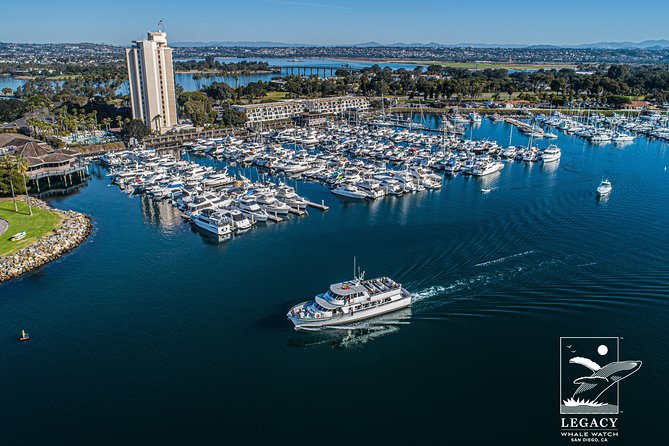
You meet at Legacy Whale Watch near 1717 Quivira Road, on San Diego’s Mission Bay. Mission Bay is known as the city’s recreational bay, and the departure area feels more like a working marina than a grand tourist dock. That is useful: you are close to the water, parking is available, and the trip gets moving without a long transfer.
The cruise heads toward La Jolla Canyon, an underwater canyon that helps attract marine life. This is not a sightseeing cruise along San Diego’s waterfront. The focus is offshore wildlife, so much of your time goes toward scanning the water for blows, fins, backs, splashes, and moving groups of birds.
That searching is part of the experience. You are not watching animals in an enclosure, and the crew cannot call up a whale on demand. A good trip may include long quiet stretches followed by a sudden burst of activity. Keep your camera ready, but do not spend all three hours looking through its screen.
The three-hour length feels right for the goal. A shorter trip could turn around just as the crew finds a pod, while a much longer outing could be tiring for anyone sensitive to motion. You get enough time to reach the wildlife area, search for different species, and return to Mission Bay without giving up an entire day.
More whale watching trips in San Diego:
- San Diego Whale Watching Cruise
★ 5.0 · 2,317 reviews - San Diego Whale Watching & Dolphin Cruise
★ 4.5 · 1,588 reviews - San Diego Whale Watching Cruise
★ 4.5 · 663 reviews
What you may see by season
Gray whales from November through April
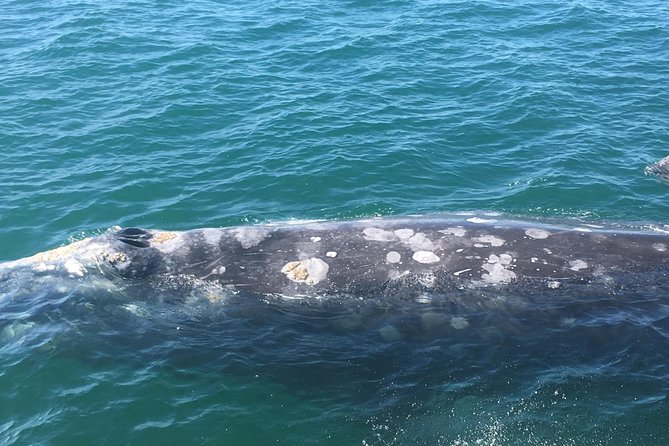
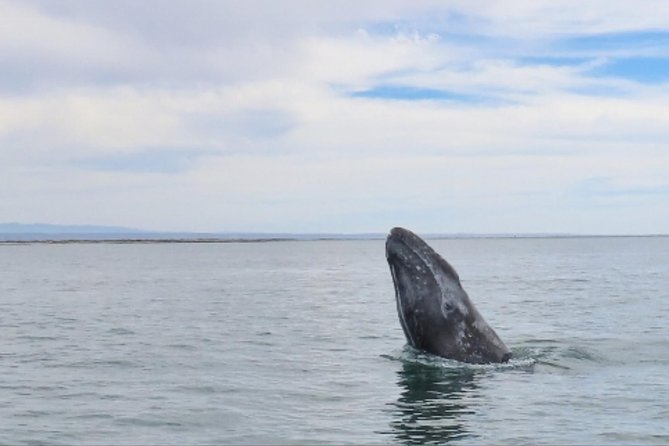
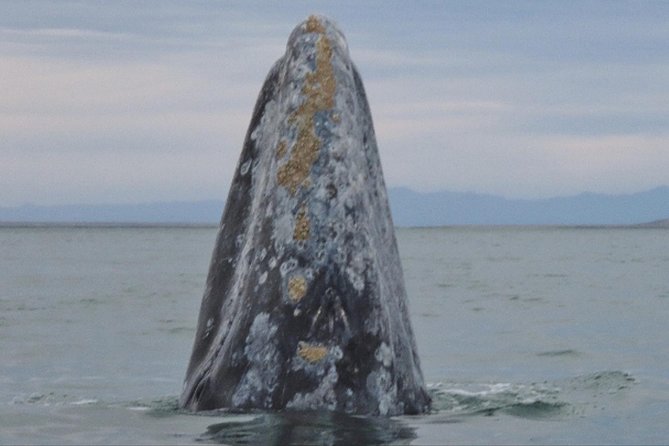
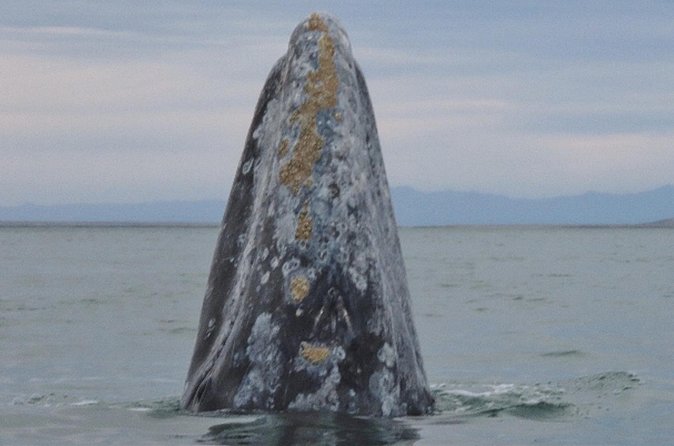
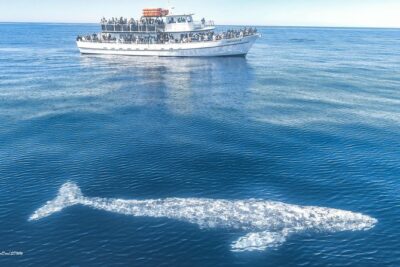
Winter is the main gray whale season. More than 20,000 California gray whales make the annual migration between the Bering and Chukchi Seas and the shallow lagoons of Baja California, covering more than 5,000 miles. This cruise lets you watch a small part of that journey from the Pacific.
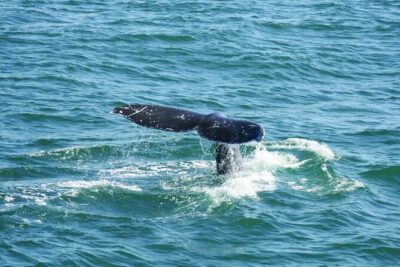
Gray whales do not always put on a dramatic show. You may see a back, a blow, or a tail before the animal disappears. That makes patience important. The crew searches for signs and works to position the boat where you have a reasonable view without treating the whales like a stage act.
Winter weather also means you should dress seriously. A rainy day can reduce visibility, as one February outing showed, when dolphins appeared but no whales did. Wear layers, bring a hat, and keep sun protection in your bag even if the morning looks gray.
Blue whales and other summer species
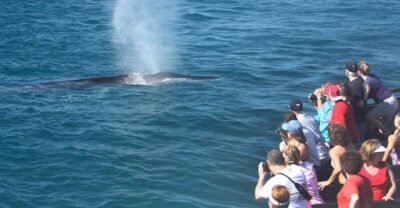
From May through October, the warmer season brings the best chance for blue whales. Blue whales are the largest animals on Earth, but the information available for this cruise does not promise a sighting. Think of summer as a favorable period, not a guarantee of a particular species.
The same months can bring fin whales, humpback whales, and minke whales. Humpbacks are especially exciting because they can be active at the surface, though a breach is never something you should expect on demand. Several outings have produced humpbacks, while others produced only dolphins.
This seasonal mix gives you a reason to return at another time of year. A winter trip offers the chance to see migrating gray whales. A summer trip changes the odds toward blue whales and other species. Neither season removes the uncertainty that makes wild whale watching different from a fixed attraction.
Same city, a completely different sort of afternoon:
- San Diego Zoo 1-Day Pass: Any Day Ticket
★ 4.5 · 4,248 reviews - San Diego Harbor Cruise
★ 4.5 · 2,980 reviews - San Diego Hop On Hop Off Trolley Tour
★ 4.5 · 2,523 reviews - USS Midway Museum Admission: Valid Any Date
★ 5.0 · 2,165 reviews
Dolphins, sea lions, and birds fill the gaps
Dolphins may be the most reliable highlight of the cruise. The boat sometimes encounters huge groups, with accounts of hundreds or even thousands moving across the water. When dolphins surround the boat, the trip can feel successful even if the whales stay hidden.
Watch for them riding the bow wave or leaping clear of the water. A large pod can spread across your entire field of view, so the best seat is not always the front. On a crowded deck, simply turning around may reveal more action behind you.
California sea lions also appear, along with several kinds of birds. The crew helps identify native and migratory land-based and seabirds, adding another layer to the trip. If you enjoy wildlife beyond the main headline species, bring binoculars and give yourself time to look away from the whale-search zone.
This is one reason I consider the tour a better value than its low price suggests. Even on outings without whales, dolphins, sea lions, birds, and ocean views can keep the three hours interesting. Still, if your only goal is to see a whale, you need to accept the possibility of disappointment.
A boat built for changing weather
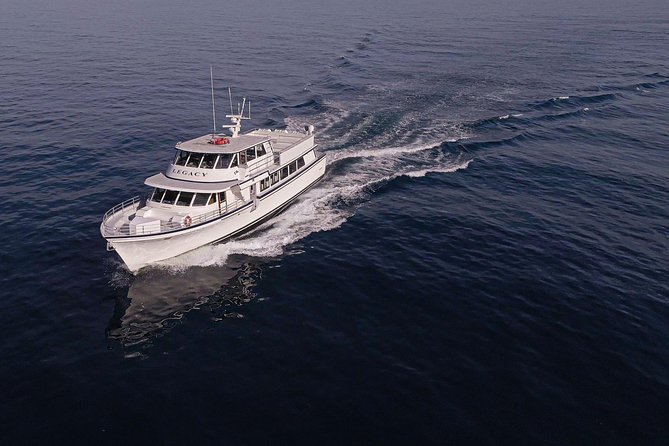
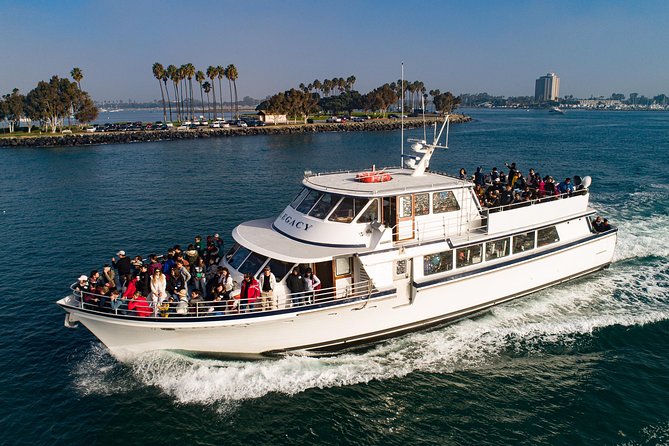
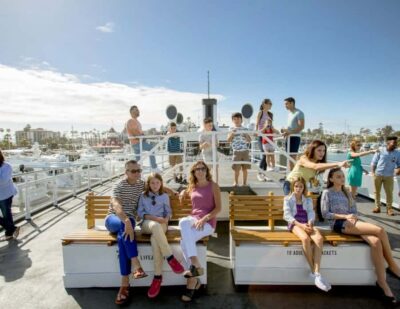
The vessel is an 80-foot fiberglass boat with two decks. It has covered seating indoors for more than 100 passengers, outside seats at the bow, and higher seating on the upper deck. Windows on both levels let you watch from shelter when the wind picks up.
That arrangement matters. You can start outside for the clearest view, move inside if the spray or cold becomes uncomfortable, then return to the deck when the crew spots something. You are not forced to spend the full trip in one position.
The boat is described as stable and well equipped, and the available feedback supports that general picture. Several outings were called smooth, clean, spacious, and comfortable. One person found it slightly bouncy but did not become seasick. Those details point to a boat that handles normal conditions well, while still behaving like a boat on the open ocean.
There is a bar with snacks and beverages, plus three full-sized bathrooms. That is more practical than it sounds. A three-hour cruise is long enough for children and adults to need a restroom, and having one on board means you do not have to choose between comfort and a good viewing position.
The audio system may be less consistent. If you sit near the back, announcements and talks can be difficult to hear. Move closer to the speaking area when possible, and listen carefully when the naturalist or crew member is explaining what you are seeing.
Crew commentary and the human side of the trip
The captain and crew do more than steer the boat. They search for wildlife, point out sightings, explain the animals, and help make sense of what you are looking at. The tone appears upbeat without turning the trip into a loud amusement ride.
Some outings have included volunteers from local natural history or environmental groups. They may give talks, display information, or explain whale behavior and ocean life. This is a nice touch because a whale sighting means more when you understand the species, its route, and why it is in these waters.
The strongest praise is directed at the staff. The crew is often described as friendly, enthusiastic, professional, and persistent in the search. One particularly good trip included four gray whales and two sets of whales that remained in the area for much of the cruise. Other trips found humpbacks, dolphins, and sea lions.
Do not assume every cruise will include a formal presentation or the same volunteer presence. That can change from one departure to another. You can expect English-language guidance from the crew, but the exact style and amount of commentary may vary.
Is $34 a good value?
Yes, for most people. At $34, the tour costs less than many three-hour wildlife cruises while including indoor and outdoor seating, bathrooms, crew guidance, and access to a snack and beverage bar. You are buying a chance to see wild animals, not a guaranteed whale performance, and the price reflects that risk.
The value gets even better when the dolphins appear in large numbers. Several trips have produced hundreds of dolphins, and some have included multiple whale species or several individual whales. At that point, the experience gives you a full morning or afternoon on the Pacific for a relatively small fee.
The value is less certain if you have a rigid whale-only goal. You could spend three hours on the water and see dolphins and birds but no whale. The operator advertises a whale guarantee, with a free ride if no whales are spotted, but some recent accounts describe receiving a 50 percent return-trip discount instead. I would confirm the current guarantee terms before booking if that policy is important to you.
A repeat trip can make sense. You may see a different species in another season, and the crew may find animals in a different part of the canyon. The flexible cancellation policy also helps: you can cancel up to 24 hours ahead for a full refund, and you can reserve now and pay later.
Parking requires careful attention
Use the lot at 1717 Quivira Road, identified as the Seaforth Sportfishing lot, or park on Quivira Road only where parking is clearly allowed. There is ample parking in the recommended area.
Do not use the nearby Seaforth Boat Rentals, Seaforth Marina, or Marina Village lots. Those businesses are described as aggressive about towing, so a cheap cruise could become an expensive mistake. The parking instructions are unusually important here, especially if you are unfamiliar with San Diego’s marina roads.
Arrive with enough time to park, find the boarding area, and get settled. If you want outdoor seating, early arrival should improve your choice of position, though no exact boarding time is provided.
How to prepare for three hours offshore
Dress in layers. Even in sunny Southern California, the wind over open water can feel cold. A warm outer layer, hat, sunscreen, and sunglasses are sensible basics.
Bring binoculars and a camera, but keep the camera secondary. Wildlife can surface anywhere around the boat, and you may miss the best moment while adjusting a zoom lens. A phone or compact camera is easier to handle when a whale appears without warning.
If you are sensitive to seasickness, think carefully before booking. The boat is stable, but it can still move, and one account describes a noticeable bounce. The information for the trip specifically says it is not suitable for people prone to seasickness.
Families and first-time whale watchers should find the mix of seating and wildlife useful. You can step inside, use the bathroom, buy a snack, and return outside without making the outing feel like an endurance test. People who want a quiet, controlled view of animals may prefer an aquarium instead, since this trip depends on weather, water conditions, and animal behavior.
Should you book the Legacy Whale Watch cruise?
I would book this trip if you want an affordable three-hour outing with a real chance of whales and a strong chance of dolphins. The stable boat, covered seating, bathrooms, friendly crew, and low price make it a practical choice for families, first-time whale watchers, and visitors who want to add an ocean activity to a San Diego day.
Choose your season with care. Pick winter for migrating gray whales and summer for the best chance at blue whales, fin whales, humpbacks, and minkes. If you cannot accept the possibility of seeing no whale, ask about the current guarantee before paying.
For the best experience, arrive early, park only in the recommended area, dress warmly, and watch the whole waterline. You may get four gray whales, a humpback, a sea lion, and a vast dolphin pod. Or you may get dolphins and seabirds on a smooth ride with a good view of the coast. At $34, that remains a fair gamble, as long as you understand what wildlife watching really is.
FAQ
Where does the whale watching cruise leave from?
The cruise departs from Legacy Whale Watch near 1717 Quivira Road, San Diego, California 92109.
Where should I park?
Use the lot at 1717 Quivira Road, identified as the Seaforth Sportfishing lot, or park on Quivira Road where parking is designated.
Where should I not park?
Do not park in the Seaforth Boat Rentals, Seaforth Marina, or Marina Village lots because vehicles may be towed.
How long is the cruise?
The whale watching cruise lasts three hours and returns to Legacy Whale Watch.
What animals might I see?
You might see gray whales, blue whales, fin whales, humpback whales, minke whales, dolphins, porpoises, California sea lions, and native or migratory birds.
When is the best time to see gray whales?
Gray whale migration generally takes place from November or December through April.
When are blue whales most likely?
Summer, from May through October, offers the best chance of seeing blue whales.
Does the boat have indoor seating?
Yes. The boat has covered indoor seating for more than 100 passengers, with windows on both decks.
Are food and drinks available?
Yes. A bar on the boat sells snacks and beverages.
Does the boat have bathrooms?
Yes. There are three full-sized bathrooms on board.
What should I bring?
Bring warm clothing, a hat, sunscreen, a camera, and binoculars.
Is the cruise suitable for people prone to seasickness?
No. The activity is specifically not recommended for people prone to seasickness.
What happens if no whales are seen?
The activity advertises a whale guarantee and may offer a free return ride if no whales are spotted. Some recent accounts describe a 50 percent discount for a future trip, so confirm the current terms before booking.
Can I cancel my reservation?
Yes. You can cancel up to 24 hours in advance for a full refund.
More 3-Hour Experiences in San Diego
- San Diego: 3 Hour Whale Watching Cruise
★ 4.5 · 106 reviews - The San Diego Tour: 3 Hours of Sightseeing
★ 4.7 · 8 reviews
Just added around San Diego
- An Art Walk Through the Barrio★ 5.0 · 11 reviews
- All-Inclusive Private Wine Tour in Baja★ 5.0 · 3 reviews
- All Day San Diego Scenic Tour★ 3.0 · 5 reviews
- 4 Hour Private Sail for up to 6 people★ 5.0 · 12 reviews
- Private Vacation Photography Session with Local Photographer in San Diego★ 5.0 · 4 reviews
- 2Hr GPS Self Guided Scooter Tour: Downtown & Balboa Park★ 4.0 · 6 reviews
- Two Hour Kayak and Snorkel Tour for Two in La Jolla★ 4.5 · 34 reviews
- Ultimate La Jolla Self-Guided Driving & Walking Audio Tour Bundle★ 3.5 · 9 reviews
San Diego Whale Watching, compared.
Whale Watching Tour – Flagship Cruises & Events
Read our review →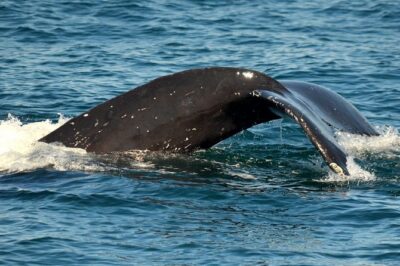
City Cruises San Diego: Whale and Dolphin Watching Adventure
Read our review →Browse the lists this tour appears in