
Reviewed · SAN DIEGO WHALE WATCHING
San Diego: Whale and Dolphin Watching Speedboat Tour
San Diego’s best wildlife encounters can happen fast. One minute you are racing away from Seaforth Marina with salt spray in your face, and the next a pod of dolphins may be leaping beside the boat. In the right season, you may also spot gray, blue, or humpback whales, with the occasional orca making an already special trip extraordinary.
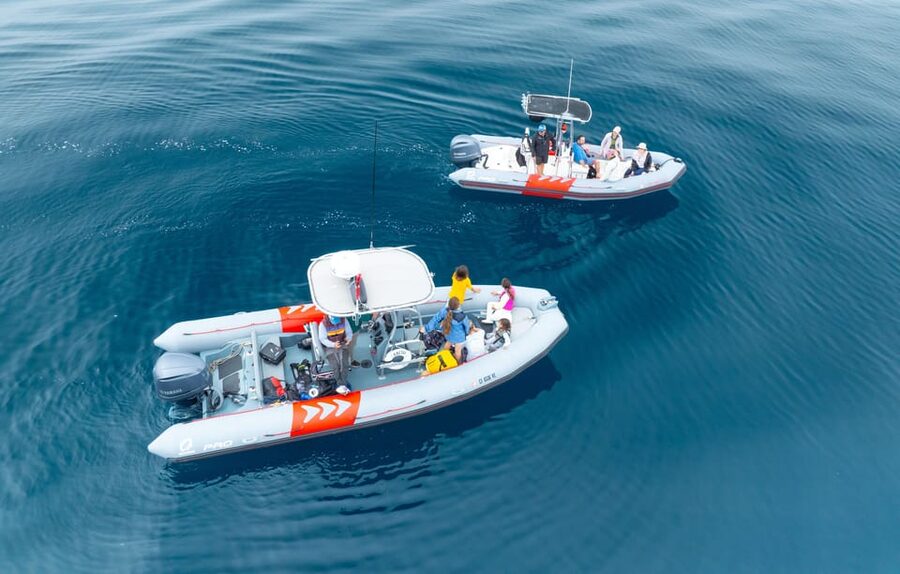
I like the six-passenger Zodiac and the boat’s speed. A small RIB can cover more water than a large sightseeing ship, and you are not peering over a crowd to see a whale’s back. I also like the chance to learn from marine biologists and naturalists, with past crews including Jack, Manolo, Carlo, Havi, and Bogart.
The main catch is simple: wildlife follows its own schedule. You could see hundreds of dolphins and only a distant whale, or spend much of the trip searching. The speed and bouncing motion can also be rough for anyone prone to seasickness, and this outing is not suited to pregnant people, non-swimmers, or those with back problems.
Key points for deciding quickly
- Only six people share the Zodiac: This gives you more room, better sight lines, and a quieter setting than a large whale-watching ship.
- The season changes what you may see: Gray whales are the main winter and spring possibility, blue whales appear in summer, and humpbacks are more likely in fall.
- Dolphins are the strongest year-round possibility: Common, bottlenose, and Risso’s dolphins may appear, with orcas seen only occasionally.
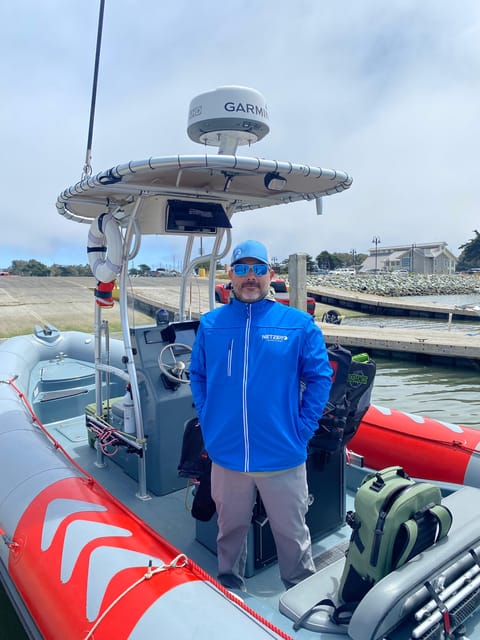
- The speed is part of the attraction: The state-of-the-art Zodiac RIB is built to move quickly and turn easily across open water.
- The trip lasts three hours: That gives the crew time to search, but it is still a compact outing rather than a full-day expedition.
- Pack for changing conditions: Wear layers, bring water, a hat, sunscreen, and a camera. Take motion-sickness medicine before departure if you need it.
Leaving Seaforth Marina in a six-person RIB
Your trip begins at Seaforth Marina. Look for the large pine tree and automatic marina gate, then wait in the seating lounge in front of the marina office. Arrive 15 minutes early. That small cushion matters because the boat leaves for a timed wildlife search, not a casual harbor cruise.
The vessel is a Zodiac RIB, a rigid inflatable boat designed for speed and agility. With room for only six participants, you get a more personal setup than you would on a large whale-watching vessel. The captain and guide can speak to the whole group without a microphone, and you can usually shift your attention quickly when someone spots movement.
The ride itself is a major part of the appeal. You are not simply transported to a viewing area. You feel the boat accelerate across the Pacific, with wind, spray, and plenty of motion. That is exciting for people who enjoy a lively ride, but it is not the best choice if you want a calm, steady platform for photography.
Safety equipment is included, and a USCG captain operates the boat. The crew also places emphasis on responsible wildlife viewing, so expect the animals to set the pace. Feeding animals is not allowed, and smoking is not permitted.
More whale watching trips in San Diego:
- San Diego Whale Watching Cruise
★ 5.0 · 2,317 reviews - San Diego Whale Watching & Dolphin Cruise
★ 4.5 · 1,588 reviews - San Diego Whale Watching Cruise
★ 4.5 · 663 reviews
Three hours of searching San Diego’s Pacific waters
Once the boat leaves the marina, the itinerary is straightforward: cruise for three hours, search for whales and dolphins, then return to Seaforth Marina. There are no separate stops or shore visits. The value comes from the time spent covering water and watching for signs of life.
A small boat can make the search feel active. Instead of waiting in one fixed place, the crew can move across a wider area and respond when dolphins, whales, or other marine life are reported nearby. One positive account described the boat as fast enough to cover much more ground than a larger craft, which is exactly the tradeoff this outing offers.
The ride may be bouncy. Keep both hands available when moving around, listen to the crew, and keep loose belongings secure. The best seat depends on your tolerance for spray and motion, but every passenger benefits from the limited group size because you are not competing with dozens of people for a view.
Marine biologists and naturalists provide commentary in English or Spanish. The quality of explanation can depend on the individual guide and the conditions of the trip. Guides such as Jack, Manolo, Carlo, Havi, and Bogart have been noted for their friendly approach, while one account felt the commentary about whales and the surrounding area was limited. If the educational side matters most to you, ask questions during the ride rather than waiting for a formal lecture.
What you might see by season
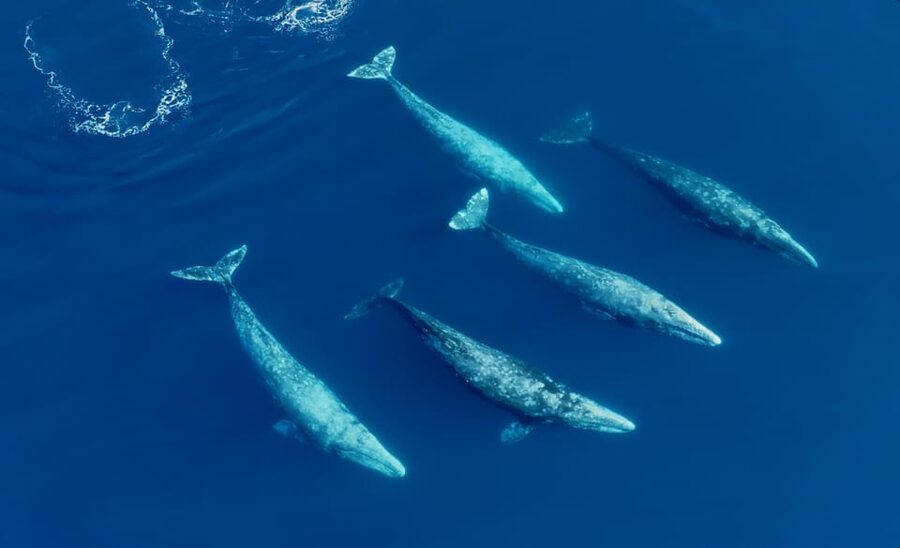
San Diego’s whale calendar gives you a useful reason to choose your travel dates carefully, although no season guarantees a sighting.
Winter and spring: gray whales
Gray whales are the main seasonal target in winter and spring. They are Southern California’s familiar migrating whales, and a sighting may involve a blow, a back, or a brief appearance before the animal slips away.
That last point matters. A whale-watching trip is not a wildlife show. You may see only part of the animal, sometimes at a distance. One December outing produced views of three whales, but only sections of their backs were visible, while the dolphins provided the more memorable display.
More boat and jet ski rentals in San Diego:
- San Diego Harbor Speed Boat Adventure
★ 5.0 · 716 reviews - San Diego Bay Jet Boat Ride
★ 5.0 · 397 reviews - San Diego: Patriot Jet Boat Thrill Ride
★ 4.8 · 395 reviews - Glow Nightime Pedal Boat Rental in San Diego Bay
★ 5.0 · 327 reviews
Summer: blue whales
Summer offers the possibility of seeing blue whales, the largest whale species found in Southern California. Their size is impressive even when the sighting is brief, but you should keep your expectations sensible. The trip description promises an opportunity to see them, not a guaranteed encounter.
A blue whale sighting can also be harder to photograph than you might expect. The boat may be moving, the whale may surface only briefly, and the Pacific can make distance difficult to judge. Watch the water rather than staring only through your camera screen.
Fall: humpback whales
Fall is associated with humpback whales, known for their more active behavior and occasional leaps or surface displays. Their acrobatic reputation gives this season extra appeal, but humpbacks can still be unpredictable.
If you want the possibility of energetic whale behavior, fall is a logical time to book. Just remember that the best sightings are luck, not a scheduled part of the itinerary.
Year-round: dolphins and the occasional orca
Dolphins are the most dependable wildlife possibility across the year. The crew may encounter common dolphins, bottlenose dolphins, or Risso’s dolphins. Several outings produced large pods, including one encounter with hundreds of dolphins that lasted roughly 45 minutes. That kind of interaction can become the highlight of the day, even if the whales remain distant.
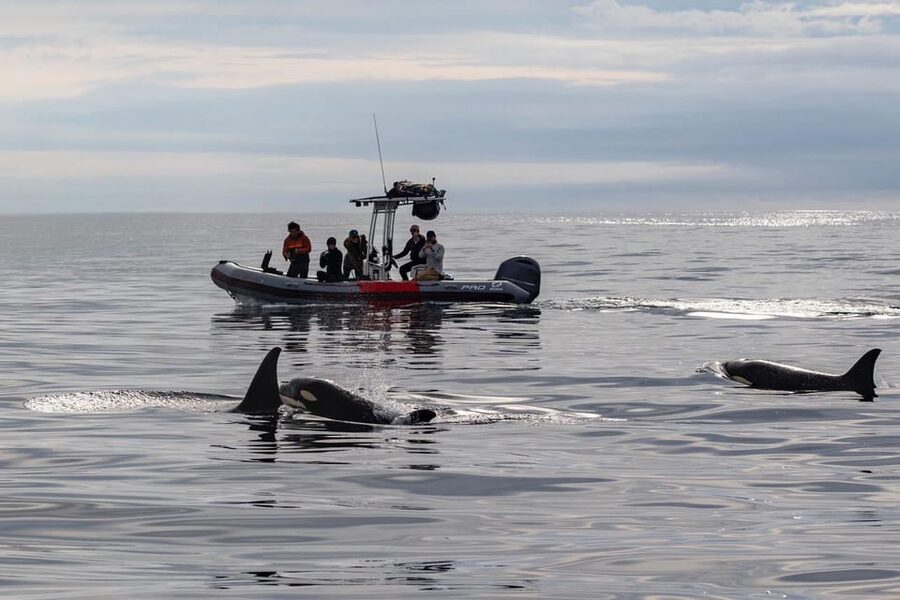
Orcas are much less predictable and are described as an occasional sighting. One small group had the remarkable experience of finding orcas about 55 minutes after departure and watching them accompany the boat for around 90 minutes. That is a rare stroke of luck, not something you should book expecting.
Why the small boat changes the experience
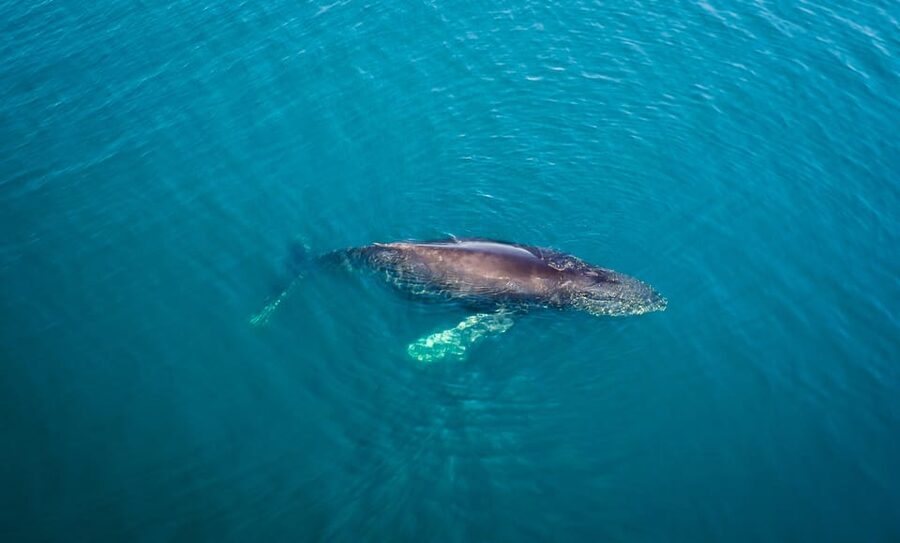
The six-person limit is the clearest reason to choose this tour over a mass-market boat. A large vessel gives you more stability and often more indoor shelter, but it also brings crowds, blocked sight lines, and a less personal connection with the crew.
On this RIB, you are close to the water and near the action. When dolphins travel beside the boat, you can see their movement more clearly and feel part of the encounter. The small group also lets the crew adjust its explanations and respond to your questions.
There is a tradeoff. Small boats move more sharply, and they offer less protection from wind and spray. The ride may feel like an adventure before you see a single animal. If you want a gentle cruise with a heated cabin, choose a larger vessel instead.
The speed is useful but not magical. It helps the captain search a larger area, yet a faster boat cannot force whales to surface. One outing produced many dolphins but no whales, while another saw a single whale and lots of dolphins. That range is normal for a wild-animal trip.
The guides and the educational side
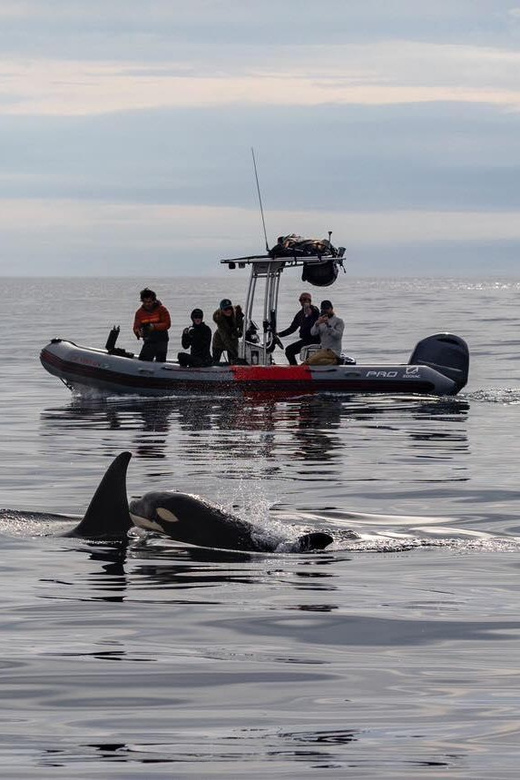
The crew is responsible for two jobs: running the boat safely and helping you understand what you are seeing. Marine biologists and naturalists provide the commentary, and the listed languages are English and Spanish.
Individual guides can shape the mood. Jack and his crew were praised for making a small-group trip feel friendly and for continuing to search when whales were difficult to find. Manolo was described as working hard to locate animals, while Bogart added jazz music to the ride. These details suggest that the crew can make the time between sightings enjoyable.
Still, the educational experience may vary. At least one outing included little explanation of the whales or the surrounding area. If you want detailed natural-history interpretation, be direct with your questions: ask about species identification, seasonal movement, feeding behavior, or why the boat is changing course.
The tour’s environmental approach is also important. The crew prioritizes safety and responsible conduct around wildlife. You should not feed the animals, and you should follow instructions about distance and boat behavior. A respectful encounter is better for the animals and usually gives you a more natural view.
The real value of the $188 price
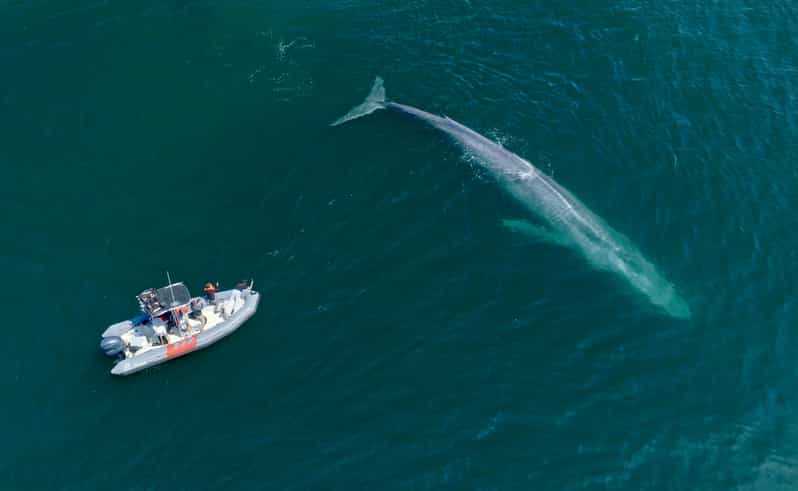
At $188 per person, this is not a budget harbor ride. You are paying for a three-hour guided search, a USCG captain, safety gear, port fees, expert commentary, and a semi-private place on a six-person boat.
The price makes more sense if you value space and flexibility. A small group means fewer people sharing each sighting, and the Zodiac’s speed can help the crew cover more ground. If your priority is a close, active ocean ride with a serious chance of seeing dolphins, the cost may feel fair.
The value is less certain if whales are your only goal. No one can guarantee a whale encounter, and some trips produce brief views rather than dramatic breaches. You could spend $188 and remember the dolphins more than the whales.
Several successful outings made the price feel worthwhile because of the combination of wildlife and boat time. One group saw two whales several times and passed through a pod of about 500 dolphins. Another found orcas that stayed near the boat for a long period. Those are exceptional days, but they show what the format can deliver when conditions and luck cooperate.
The free cancellation period, up to 24 hours before departure, gives you some flexibility. You can also reserve now and pay later. Check the forecast before you go, since weather affects both comfort and the quality of the ride.
What to bring for a comfortable ride
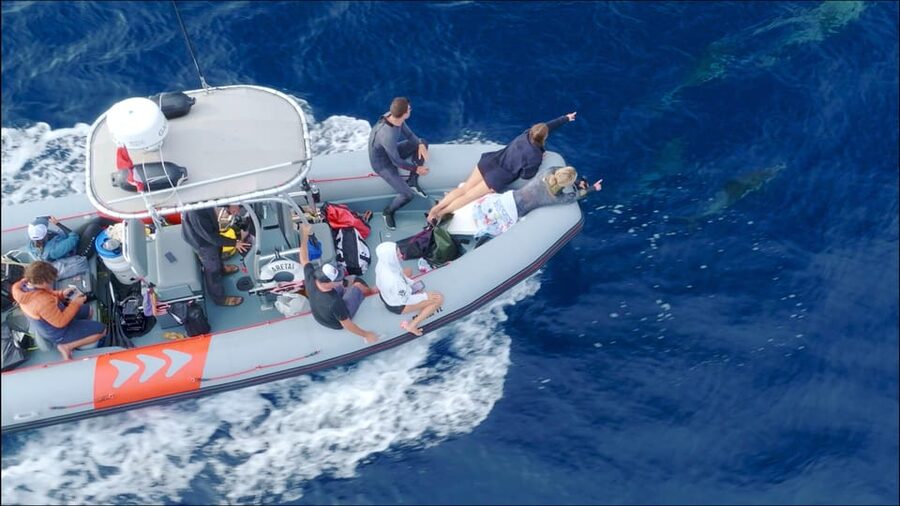
Wear layers. Even on a warm San Diego day, wind across open water can feel cold, and the boat’s speed adds to the chill. Comfortable clothes are more useful than anything formal.
Bring water, sunscreen, a hat, and a camera. Keep your camera protected from spray and hold it securely when the boat is moving. Food and drinks are not included, so eat beforehand if you need a proper meal, although the supplied details do not specify onboard food service.
If you are prone to seasickness, take appropriate medication before departure rather than waiting until the boat is already moving. The outing is not suitable for people with back problems, pregnant people, non-swimmers, or those who are especially prone to seasickness.
The boat is small, fast, and exposed. That is exactly why many people choose it, but it also means you should be honest about how you handle motion, wind, and a three-hour ride.
Who will enjoy this tour most?
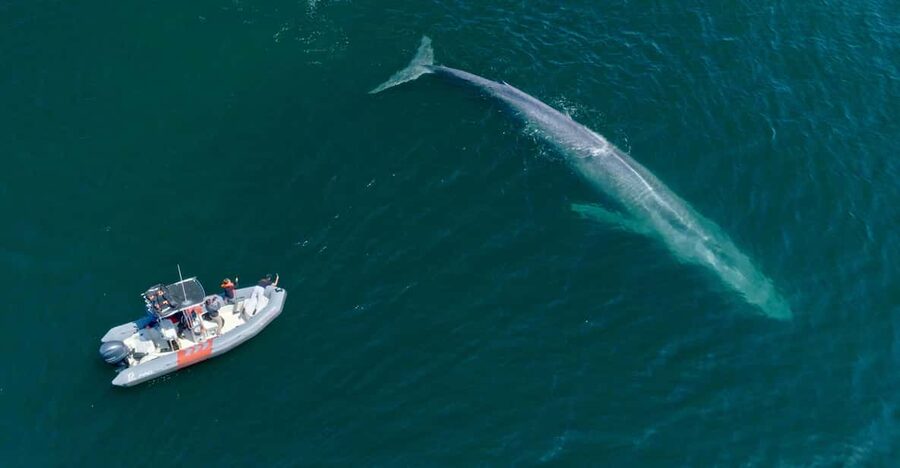
I would recommend it to you if you want a small-group wildlife trip with a real sense of motion. It suits couples, solo visitors, and small parties who would rather share a boat with five other people than sit among a large crowd.
It is especially appealing if dolphins are high on your list. Large pods are possible, and the animals may swim and leap around the boat for an extended period. The tour also suits people who enjoy changing plans, open-water conditions, and the suspense of searching.
You may want a larger boat if stability is more important than speed, or if you are unsure about seasickness. You should also choose another activity if you need guaranteed whale sightings, a calm ride, or a long formal talk about marine biology.
Should you book the San Diego Zodiac tour?
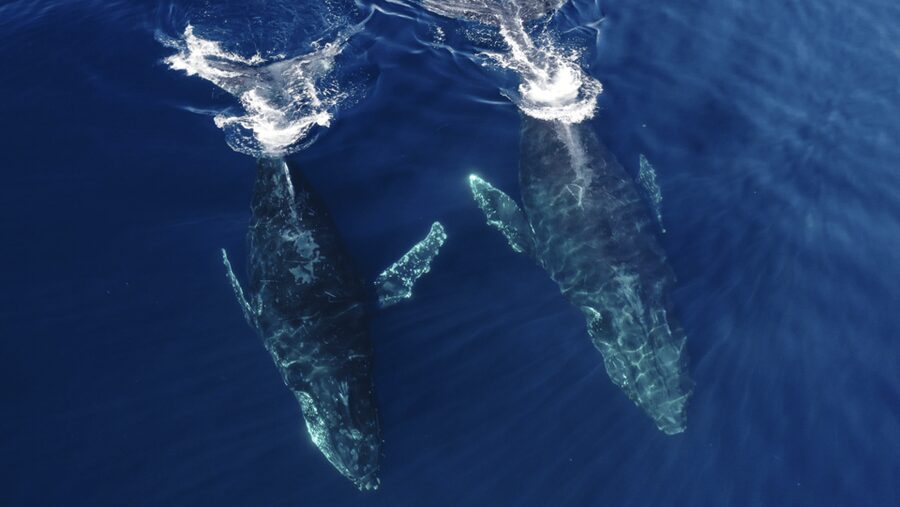
Book it if you want the smallest possible group, a fast boat, and a better chance of covering a wide area than you would on a slower, crowded vessel. The dolphins may be the star, and on a fortunate day you could see whales or even orcas in an unusually personal setting.
Skip it if $188 feels too steep for an outing with no guaranteed whale encounter, or if you dislike bouncy boats. Check the seasonal targets, review the weather, arrive early at Seaforth Marina, and bring layers. For the right person, the speedboat is not just transportation to the wildlife. It is half the fun.
FAQ
Where does the whale and dolphin tour begin and end?
The tour begins and returns at Seaforth Marina in San Diego. Wait at the seating lounge in front of the marina office, near the large pine tree and automatic marina gate.
How long does the tour last?
The guided speedboat tour lasts three hours, including the cruise from Seaforth Marina and the return to the marina.
How many people can join the boat?
The tour is limited to six participants. It is described as a semi-private small-group experience.
What animals might I see?
You may see whales, dolphins, and other marine species. Seasonal whale possibilities include gray whales in winter and spring, blue whales in summer, and humpback whales in fall. Common, bottlenose, and Risso’s dolphins may appear year-round, and orcas are seen occasionally.
Is commentary available in more than one language?
Yes. Live guiding is available in English and Spanish.
What should I bring?
Bring a hat, camera, sunscreen, water, and comfortable clothing. Wear layers because it can feel cold on the water.
Is the tour suitable for people prone to seasickness?
The tour is not suitable for people prone to seasickness. Motion-sickness medication is recommended if you are susceptible, and you should check weather conditions before departure.
Is food included?
No. Food and drinks are not included, so plan accordingly before departure.
More Dolphin Watching Trips in San Diego
- Dolphin and Whale Watching Sunset Cruise
★ 4.5 · 249 reviews - San Diego: Whale and Dolphin Watching Cruise
★ 4.3 · 186 reviews - City Cruises San Diego: Whale and Dolphin Watching Adventure
★ 4.0 · 143 reviews - Whale and Dolphin Watching in San Diego
★ 5.0 · 129 reviews
Just added around San Diego
- An Art Walk Through the Barrio★ 5.0 · 11 reviews
- All-Inclusive Private Wine Tour in Baja★ 5.0 · 3 reviews
- All Day San Diego Scenic Tour★ 3.0 · 5 reviews
- 4 Hour Private Sail for up to 6 people★ 5.0 · 12 reviews
- Private Vacation Photography Session with Local Photographer in San Diego★ 5.0 · 4 reviews
- Two Hour Kayak and Snorkel Tour for Two in La Jolla★ 4.5 · 34 reviews
- Ultimate La Jolla Self-Guided Driving & Walking Audio Tour Bundle★ 3.5 · 9 reviews
- 2Hr GPS Self Guided Scooter Tour: Downtown & Balboa Park★ 4.0 · 6 reviews
San Diego Whale Watching, compared.
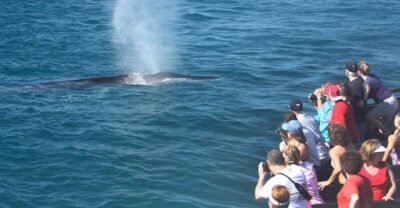
Whale Watching Tour – Flagship Cruises & Events
Read our review →
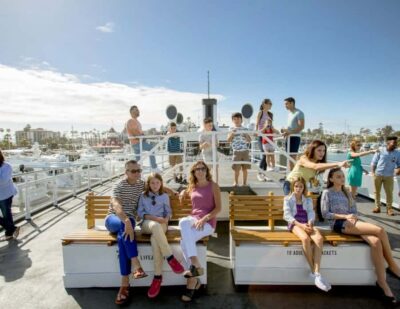
City Cruises San Diego: Whale and Dolphin Watching Adventure
Read our review →Browse the lists this tour appears in