
Reviewed · SAN DIEGO WHALE WATCHING
San Diego: Whale Watching Cruise
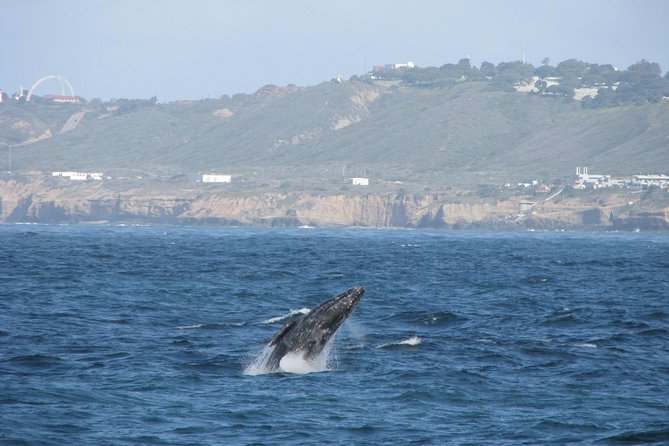
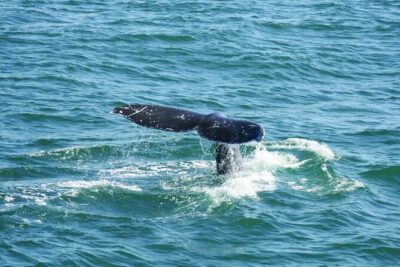
The real appeal here is the chance to see large marine life in open water, not behind glass. A cruise can bring you near gray, humpback, fin, minke, or even blue whales, along with dolphins, sea lions, and birds. The wildlife is never guaranteed, but the range of sightings can be remarkable.
I like the certified marine biologist’s narration, which gives the ride a purpose beyond simply scanning the horizon. I also like the family-run feel, indoor and outdoor seating, and free parking at Mission Bay. The catch is simple: this is a wild-animal trip, so a long stretch without a whale is possible, and the ride can be rough for anyone prone to seasickness.
- Year-round wildlife: Whales and dolphins can be seen in every season, with different trip lengths in winter and the rest of the year.
- Fast route to open water: The boat leaves Mission Bay and makes a speedy run toward the ocean, giving you more time in the areas where wildlife is found.
- Marine biology commentary: Your English-speaking guide explains what you are seeing and answers questions as the crew searches.
- Many possible sightings: Past trips have included blue, fin, humpback, minke, and gray whales, several dolphin species, sea lions, seabirds, and mola mola fish.
- Useful onboard comforts: Choose indoor or outdoor seating, and buy snacks and drinks during the cruise.
- Easy base in Mission Bay: Free parking is included, and the cruise returns to the same meeting point.
From Mission Bay to the open Pacific
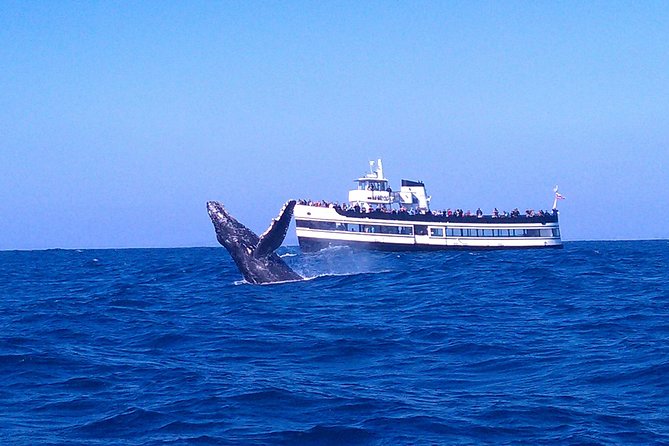
The trip begins at Mission Bay, but the main event is offshore. After check-in, the boat heads out on a speedy run toward open water, where the crew begins searching for signs of whales, dolphins, and other sea life.
That outward journey matters. You are not spending the whole three hours circling the bay. The boat goes far enough offshore to reach areas where large pods and migrating whales may be found. This also means you should expect a genuine ocean outing, not a short harbor ride with a few scenic turns.
As you leave the marina, the view includes San Diego’s seaside communities. The marine biologist may talk about the coast while the crew scans ahead. Some people may find this part quieter than the wildlife viewing, but it gives you time to settle in and get used to the movement of the boat.
The ride usually lasts 2.5 to 3 hours from March through November. From December through February, it is shorter, around 2 to 2.5 hours. That seasonal difference is worth noting if you are planning around a tight schedule or are unsure how you will handle several hours at sea.
What the marine biologist adds
A certified marine biologist provides live commentary in English throughout the outing. The guide does more than point toward a whale. You get help identifying species, understanding animal behavior, and making sense of the birds, sea lions, and dolphins that appear along the way.
The commentary also helps during the waiting periods. Whale watching involves patience. You may spend time looking at empty water before a blow, fin, or tail appears. Good narration turns that pause into part of the experience rather than dead time.
The guide’s role is especially useful when dolphins arrive first. Several species have been seen, including common dolphins, bottlenose dolphins, and Risso’s dolphins. A large pod may ride near the boat for several minutes, making the action feel lively even if no whale appears that day.
The commentary can also cover seabirds and other creatures. Past sightings have included pelicans, sea lions, and mola mola fish. If you are interested in ocean life beyond whales, ask questions when the guide is available. The trip has room for more than the headline animals.
One fair criticism is that the narration may feel lighter during the long run out to sea. If your main interest is marine science, you may want to ask about local species, the food chain, or how the animals live below the surface. The guide is there to answer questions, and specific questions can make the ride more rewarding.
More whale watching trips in San Diego:
- San Diego Whale Watching Cruise
★ 5.0 · 2,317 reviews - San Diego Whale Watching & Dolphin Cruise
★ 4.5 · 1,588 reviews - San Diego Whale Watching Cruise
★ 4.5 · 663 reviews
The wildlife you may see offshore
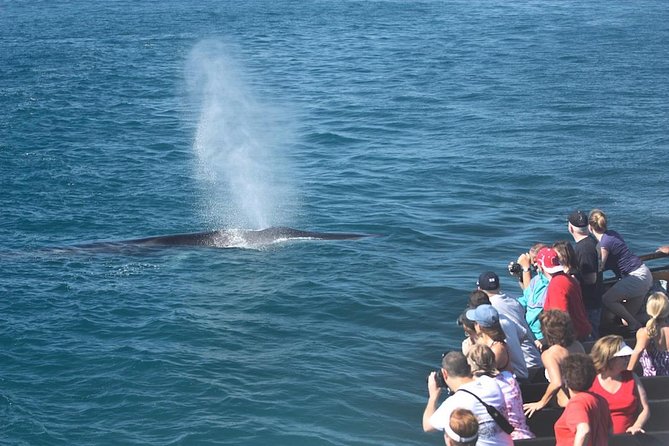
Whales are the prize, but they are not the only reason to go. This stretch of ocean can produce a changing cast of animals, and the variety often saves a trip when whales stay out of sight.
Gray whales have been seen, along with humpback whales, minke whales, fin whales, and blue whales. A fin whale is the second-largest whale species, so spotting one is a major moment. Blue whales are even less common, and one trip produced a sighting that included a look at the animal’s distinctive brick-brown waste floating in the water.
Those details may sound strange, but they show how close attention can add to the experience. The guide and crew are not simply waiting for a dramatic breach. They are watching for blows, dorsal fins, tails, feeding activity, and other signs that reveal what is below the surface.
Dolphins may provide the most active show. Large groups have been seen near the boat, and some have played alongside it for several minutes. Common, bottlenose, and Risso’s dolphins have all appeared on past outings. If you are traveling with children or teenagers, this fast-moving action may hold their attention better than a distant whale.
Sea lions and seabirds add more frequent sightings. Pelicans are among the birds seen, and large groups of sea lions may gather in the area. You might also see mola mola, or ocean sunfish, though they are not a regular promise.
The important point is to set your expectations correctly. The crew can search in productive waters, but it cannot control wild animals. You might see several whales, hundreds of dolphins, and sea lions on one trip. On another, you could see dolphins and birds but no whales. That uncertainty is part of the bargain.
A realistic look at the three-hour schedule
The precise sequence changes with the animals, but you can expect a few broad stages.
First comes check-in and boarding at Mission Bay. The boat then travels toward open water. During this part, listen to the guide, watch the coastline, and choose a place where you can see without blocking another passenger’s view.
Once the boat reaches the search area, the captain and crew look for blows, splashes, fins, and groups of birds. The boat may slow or alter course when animals are spotted. This is when you will want your camera ready, though wildlife can surface without warning and disappear just as quickly.
The middle portion may include several stops or slow passes near animal activity. A pod of dolphins can keep the boat busy for a while. A whale may surface repeatedly, allowing the captain to position the boat for better views. Or the search may take time, with the guide filling the gaps through commentary.
Finally, the boat returns to Mission Bay. The cruise ends where it began, so you do not need to arrange a separate ride from another harbor.
The winter trip is shorter, at about 2 to 2.5 hours. The March through November trip runs roughly 2.5 to 3 hours. Check the scheduled departure time and season before booking, since the available start times can change.
Boat comfort, snacks, and motion on the water
You can sit indoors or outside. Outdoor seating gives you the best chance of spotting an animal quickly, since you can scan in more directions and avoid reflections. Indoor seating is useful when the wind picks up, when the sun is strong, or when you need a break from the open air.
Snacks and beverages are sold onboard, but food and drinks are not included in the $70 ticket. Bring that extra cost into your budget. The bar is convenient, but you should not assume a full meal is available.
The boat is clean, and the crew works to make the ride comfortable. Some crew members have helped passengers dealing with motion sickness. Still, this is an open-ocean trip, and the surface can move sharply even on a pleasant day. If you know you get seasick, plan ahead and follow the advice that works for you.
The activity is not suitable for people with heart problems or wheelchair users. Those limits are important to consider before paying, since the booking may not suit every member of your group.
Same city, a completely different sort of afternoon:
- San Diego Zoo 1-Day Pass: Any Day Ticket
★ 4.5 · 4,248 reviews - San Diego Harbor Cruise
★ 4.5 · 2,980 reviews - San Diego Hop On Hop Off Trolley Tour
★ 4.5 · 2,523 reviews - USS Midway Museum Admission: Valid Any Date
★ 5.0 · 2,165 reviews
Why the family-run operation matters
A family-owned and operated business gives this cruise a more personal character. The staff handle the practical work, answer questions, and help passengers enjoy the time on the water. That local connection also matters if you prefer to support a small San Diego company rather than a large, impersonal operation.
The crew’s attentiveness has been one of the strongest parts of the experience. Staff answer questions and help make the trip comfortable. Digital photos are also delivered quickly after the cruise, which can be useful if you want a souvenir without spending the whole outing behind your phone.
Service is not perfect every minute. One isolated complaint involved a frustrating exchange over the number of creamers provided with coffee. That is a small issue compared with whale sightings, but it is fair to say that a good boat experience still depends on polite service in the snack area.
Overall, the operation appears best suited to people who value friendly help, practical comforts, and a guide who can explain what is happening as the captain searches.
Is $70 a fair price?
At $70 per person, this is not a bargain attraction in the way a short harbor cruise might be. You are paying for a three-hour excursion, a boat ride into open water, live marine biology commentary, free parking, and the chance to see animals that cannot be scheduled or staged.
The value improves if you see several species. A day with whales, dolphins, sea lions, and birds gives you a full wildlife outing. A day with dolphins and seabirds but no whales can still be worthwhile, though you need to be comfortable with nature’s uneven results.
Free parking helps if you are driving to Mission Bay. Indoor and outdoor seating also add practical value, especially on a longer trip. Food and drinks cost extra, so bring a little spending money or eat before you board.
I would judge the price by your attitude toward wildlife watching. If you need a guaranteed whale sighting, $70 may feel risky. If you enjoy the search and would be happy with dolphins, sea lions, birds, and coastal views, the ticket makes more sense.
Planning your arrival at Mission Bay
You must check in 45 minutes before departure. The ticket counter is in a small gray booth between H2O Jet Ski Rentals and the Fish & Chips Shop, facing the marina.
Do not cut this close. You need to finish the check-in process and receive a physical boarding pass. Complete the pre-arrival waivers before reaching the counter if possible. That saves time and reduces stress before departure.
Free parking is included, which is helpful at a busy waterfront location. Still, give yourself enough time to find the booth and walk from the parking area. The cruise returns to this same meeting point.
Trips operate rain or shine, but poor sea conditions can lead to cancellation. The activity allows a full refund if you cancel at least 24 hours ahead, and you can reserve now and pay later if you want to keep your plans flexible.
Who will enjoy this cruise most?
I would recommend it to families, couples, visitors interested in marine life, and anyone who wants a three-hour break from city sightseeing. The mix of whales, dolphins, sea lions, and birds gives the trip enough variety for a broad range of interests.
It is also a good choice for teenagers. Dolphins can be fast and playful, and the possibility of a blue whale or fin whale gives the outing a real sense of discovery.
You should think twice if you dislike uncertain plans, get badly seasick, or need step-free accessibility. The boat travels into open ocean, and there can be long pauses between sightings. The activity is also not suitable for wheelchair users or people with heart problems.
Photographers should bring patience more than equipment. A whale may appear for only a few seconds, while dolphins may stay near the boat longer. The crew’s digital photos can help preserve the day, but wildlife photography is always a matter of timing.
Should you book the San Diego whale watching cruise?
Book it if you want a real ocean search with expert commentary, free parking, and the chance to see much more than whales. The strongest reasons are the range of possible wildlife and the attentive, family-run operation.
Skip it if you need a guaranteed sighting or cannot handle boat motion. For everyone else, the $70 ticket offers a solid way to reach the open Pacific from Mission Bay. Go with flexible expectations, arrive 45 minutes early, and treat every dolphin, sea lion, bird, and whale as part of the day’s unpredictable score.
FAQ
How long is the San Diego whale watching cruise?
Trips from March through November last about 2.5 to 3 hours. Trips from December through February last about 2 to 2.5 hours.
Where does the cruise depart?
The cruise departs from Mission Bay in San Diego. Check in at the small gray booth between H2O Jet Ski Rentals and the Fish & Chips Shop, facing the marina.
How early should I arrive?
Arrive 45 minutes before the scheduled departure. You need time to complete check-in and receive your physical boarding pass.
Is parking included?
Yes. Free parking is included with the activity.
What animals might I see?
Possible sightings include whales, dolphins, sea lions, and birds. Past sightings have included gray, humpback, fin, minke, and blue whales, plus common, bottlenose, and Risso’s dolphins, pelicans, and mola mola fish.
Is whale watching available year-round?
Yes. The cruise operates year-round, although trip lengths differ between the December through February season and the March through November season.
Is food included?
No. Food and drinks are not included, but snacks and beverages are available for purchase onboard.
Is there indoor seating?
Yes. The boat has both indoor and outdoor seating.
What language is the live commentary in?
The live tour commentary is provided in English by a certified marine biologist.
What happens if the sea conditions are poor?
Trips can be canceled because of poor sea conditions. The cruise operates rain or shine when conditions allow.
Just added around San Diego
- An Art Walk Through the Barrio★ 5.0 · 11 reviews
- All-Inclusive Private Wine Tour in Baja★ 5.0 · 3 reviews
- All Day San Diego Scenic Tour★ 3.0 · 5 reviews
- 4 Hour Private Sail for up to 6 people★ 5.0 · 12 reviews
- Private Vacation Photography Session with Local Photographer in San Diego★ 5.0 · 4 reviews
- Two Hour Kayak and Snorkel Tour for Two in La Jolla★ 4.5 · 34 reviews
- Ultimate La Jolla Self-Guided Driving & Walking Audio Tour Bundle★ 3.5 · 9 reviews
- 2Hr GPS Self Guided Scooter Tour: Downtown & Balboa Park★ 4.0 · 6 reviews
San Diego Whale Watching, compared.
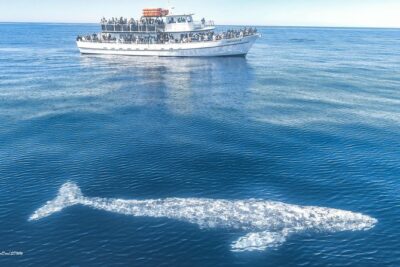
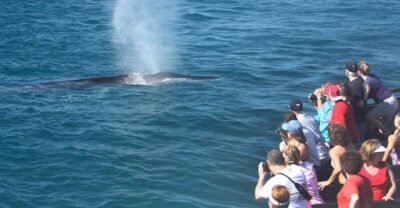
Whale Watching Tour – Flagship Cruises & Events
Read our review →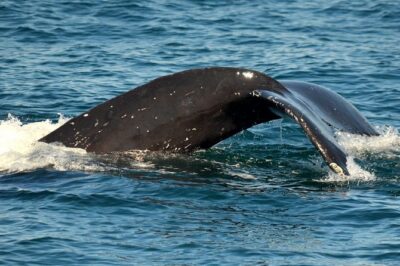
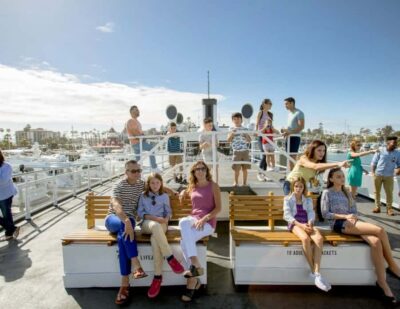
City Cruises San Diego: Whale and Dolphin Watching Adventure
Read our review →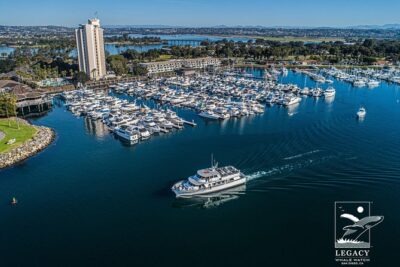
Browse the lists this tour appears in