
Reviewed · SAN DIEGO MUSEUM TICKETS
Museum of Illusions San Diego Admission Ticket
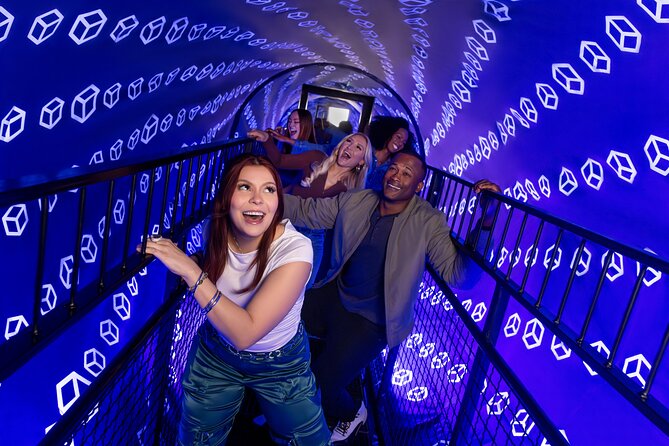
The best reason to visit the Museum of Illusions San Diego is simple: it turns your own eyes and brain into the main attraction. You can appear upside down, seem to shrink or grow, walk into a life-size kaleidoscope, and test holograms and optical tricks that show how easily perception can be fooled.
I like the hands-on design, since you are not just staring at display cases. I also like the downtown location, close to Petco Park, the San Diego Convention Center, hotels, and restaurants. The main caution is size. Some people may finish in well under an hour, making the $35 admission feel steep for a short outing.
Key points
- More than 50 optical illusions: Expect rooms, installations, holograms, and interactive displays rather than a traditional collection.
- Built for photographs: The upside-down and perspective rooms give you clear chances to create playful pictures.
- Short downtown stop: The visit can last from about one minute to 90 minutes, depending on your pace and crowd levels.
- Friendly photo help: Staff can suggest how to position yourself for better pictures, with Cameron receiving especially warm praise.
- Crowding can affect the fun: Busy time slots may make it hard to move freely or get an unhurried turn at each exhibit.
- Check the price carefully: The listed admission is $35 per person, while one booking experience reported a lower direct museum price.
What the Museum of Illusions Actually Offers
This is not a large art museum or a science center with long galleries. It is a compact collection of visual and sensory puzzles designed to make you question what your eyes are telling you.
You move through rooms and installations that play with gravity, scale, perspective, reflection, and the brain’s interpretation of visual information. The point is not simply to find a funny photo angle. The better exhibits show why a familiar room or object can look completely wrong when the visual clues change.
The museum advertises more than 50 exhibits, including holograms and interactive installations. That gives you plenty to try, but the total visit still depends on how long you spend at each station. If you quickly take a picture and move on, you could be finished far sooner than 90 minutes.
I would think of the museum as a concentrated indoor attraction rather than a half-day activity. It works well when you want something different between downtown plans, especially if you are already near the Gaslamp Quarter.
More museum tickets in San Diego:
- USS Midway Museum Admission: Valid Any Date
★ 5.0 · 2,165 reviews - Maritime Museum of San Diego Admission Ticket
★ 4.5 · 98 reviews - San Diego: San Diego Natural History Museum Ticket
★ 4.7 · 33 reviews
The Upside-Down Room and Other Photo Stops
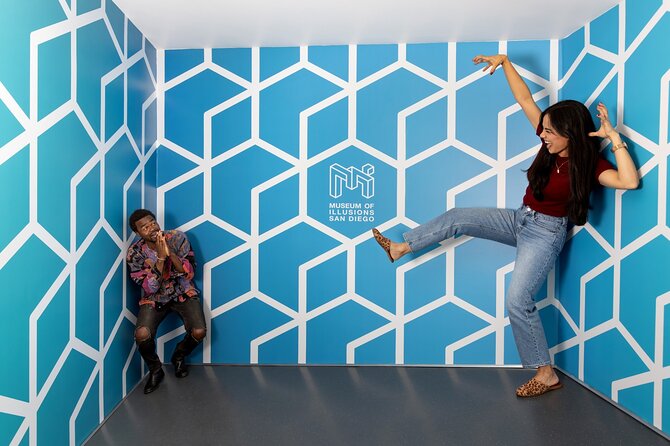
The upside-down areas are among the clearest reasons to come. The room reverses the normal visual cues, allowing you to pose as if you are standing on a ceiling or moving through an upside-down home.
These exhibits work best when you take a moment to plan the pose. Staff members can offer advice on where to stand and how to frame the picture. That help matters because a small change in position can make the illusion look convincing or fall flat.
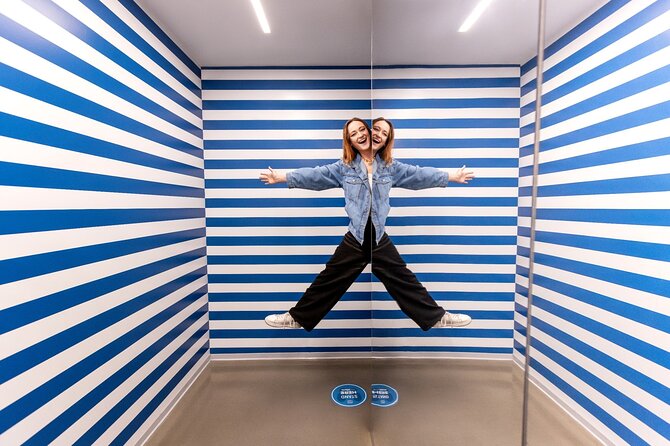
Other displays let you appear taller, shorter, larger, or smaller. These tricks are especially easy to understand when you stand beside a friend or family member. The contrast makes the effect more obvious, and it gives you a natural reason to work together rather than rush through alone.
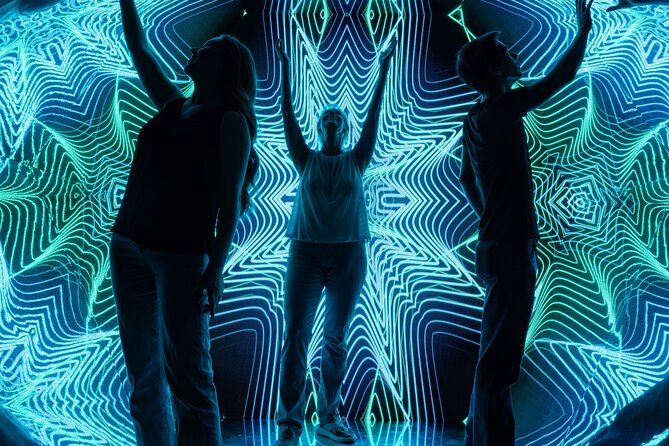
You can also enter a life-size kaleidoscope, where repeated reflections change the way the space appears around you. Holograms add another kind of visual trick, showing how a flat image or carefully arranged light can seem to have depth.
The museum does not depend on rare objects or old artifacts. Its appeal comes from what you do inside each setting. If you enjoy taking playful photos, the rooms give you a clear purpose. If you prefer quiet observation, the science behind the tricks may hold your interest, but the small scale could leave you wanting more.
Why the Science Matters
The displays are more useful when you treat them as demonstrations of perception rather than a string of photo booths. Your eyes gather information, but your brain decides what that information means. Change the angles, reflections, or surrounding clues, and your brain can reach a very different conclusion.
That makes the museum a good fit for families and curious adults. Children can enjoy the strange pictures, while older visitors can think about why the effect works. The experience stays light, but it still gives you a basic lesson in how sight and interpretation connect.
You do not need a technical background to enjoy the exhibits. The value is in seeing the trick happen to you. A written explanation can tell you that perspective affects perception, but standing in a room where your body appears to change makes the idea easier to remember.
The educational side also helps explain the price. You are paying for access to a set of constructed environments, not for a long collection that you can view at your own pace for several hours. The more you test the exhibits, compare photos, and think about the mechanics, the more useful the admission becomes.
A Downtown Location Near San Diego Sights
The museum is in downtown San Diego’s Gaslamp Quarter. That puts it within easy reach of Petco Park, the San Diego Convention Center, and many hotels and restaurants.
This location is one of the museum’s strongest practical points. You can pair it with a downtown meal, a convention visit, or time around a baseball game. It also gives you a weather-proof option when you want a short indoor activity instead of committing to a long attraction.
The location is near public transportation, according to the supplied details. The address is described as easy to find, and the downtown setting means you have plenty of nearby places to continue your day.
The tradeoff is that the museum may feel more like a quick stop than a main destination. If you are building a full day around it, plan another activity nearby. The museum itself is not described as large, and the expected duration can be as short as one minute or as long as 90 minutes.
That wide time range tells you something important. Your visit is flexible, but it is not predictable in the way a scheduled guided tour is. You might move through quickly, or you might spend extra time posing, reading, and waiting for space at popular exhibits.
More museums in San Diego:
- San Diego: Museum of Illusions Entry Ticket
★ 3.5 · 24 reviews - San Diego: Maritime Museum of San Diego Admission
★ 4.6 · 17 reviews - San Diego Natural History Museum Nighttime Entry Ticket
★ 5.0 · 5 reviews - San Salvador 16th Century Galleon Sail w/ Museum Admission
★ 5.0 · 3 reviews
How Long Should You Allow?
For planning purposes, I would reserve up to 90 minutes, while recognizing that your actual visit could be much shorter. The official duration range begins at one minute, which is unusually broad and signals that there is no fixed program or lengthy route.
If the museum is quiet, you can take your time with each illusion. You can try different poses, help someone else take a picture, and repeat the exhibits that work best for your group.
Crowds change the timing. A packed time slot can make the museum feel cramped, and you may have to wait for a clear chance to use a room. That can stretch the visit without making it more satisfying.
A quieter visit gives you the opposite problem: you may finish quickly because the museum is compact. I would avoid scheduling it as your only major activity of the day. Treat it as a flexible downtown stop with a firm upper limit, not as a full afternoon program.
The Crowd Question
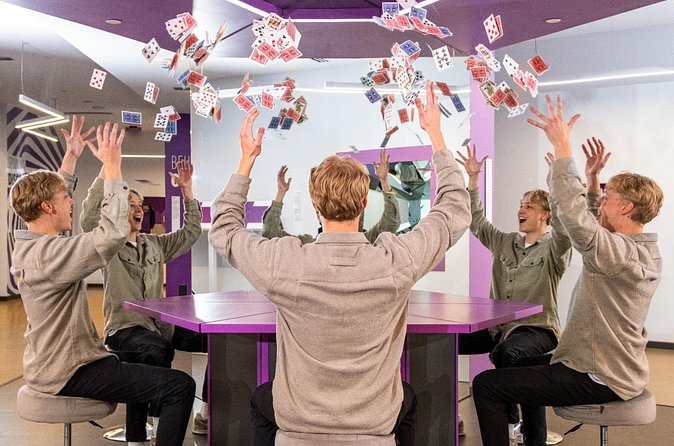
Crowding is the biggest practical concern. One visitor found the museum so busy that moving through the rooms became difficult and felt the admission was not worthwhile.
That does not mean every visit will be crowded, but it shows why timing matters. When several groups reach the same popular room at once, the attraction changes. Instead of testing an illusion at your own pace, you may feel pushed to take one picture and let the next person in.
Busy conditions can also affect families. Children may want to repeat an exhibit, while other groups are waiting. Couples and friends may need a little space to line up a photo. If you dislike close quarters or waiting for picture opportunities, this is a real consideration.
On the other hand, staff have been described as helpful and professional. They can offer advice on taking better photos, which can save time and improve the result when you do get your turn.
I would book at a time when you can be flexible, if the available schedule gives you that choice. Avoid assuming that every time slot will feel equally relaxed.
Staff Help and the Photo Experience
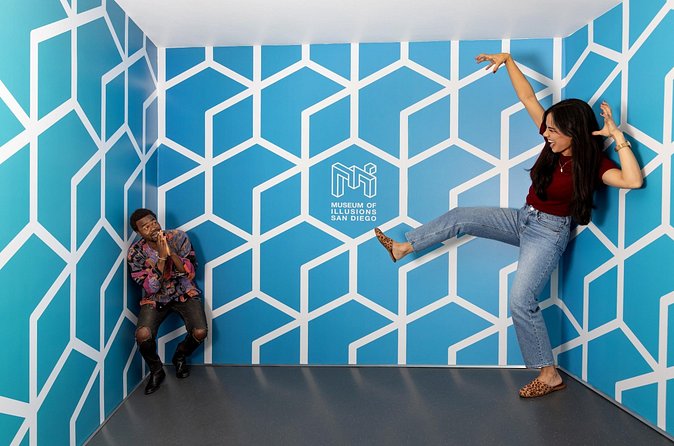
The people working inside can make a difference here because many exhibits depend on camera position. A staff member can tell you where to stand, how to angle the phone, or how to frame the room so the illusion reads clearly.
Cameron received especially strong praise for being helpful. That is worth noting because the museum is built around participation, not just viewing. Friendly assistance can turn a confusing setup into a successful photograph.
You should still expect to do some of the work yourself. The museum provides the setting, but your pose, camera angle, and timing determine how convincing the final image looks. This is more enjoyable with a friend who is willing to experiment.
The clean interior and easy movement through the sections were also praised in one visit. That matches the museum’s basic purpose: you should be able to focus on the displays without dealing with a complicated route.
Still, cleanliness and staff service cannot solve every crowd problem. If rooms are full, even good advice may not give you the relaxed photo session you want.
Is $35 Per Person a Fair Price?
The listed price is $35 per person. For a short attraction, that is not a small charge, so the value depends heavily on your expectations and the pace of your group.
I think the price makes more sense if you enjoy taking photos, trying physical illusions, and discussing how the tricks work. A family or group of friends can get more from the admission because everyone can take turns posing and photographing one another.
The price is harder to justify if you expect a large museum with hours of material. The collection is described as over 50 exhibits, but the building itself is not very big. You may see most of it in less than 90 minutes, especially if the rooms are busy or you move quickly.
There is also a pricing issue worth checking before you pay. One booking experience reported that direct admission at the museum was $26, while a third-party purchase came to $105 for three family members. That is a substantial difference from the listed $35 rate. Prices can change, but I would compare the museum’s direct price with any outside booking total, including fees, before confirming.
If the museum is a priority, the admission may be reasonable for a playful, photo-focused stop. If you are judging it strictly by minutes inside, it may feel expensive.
Who Will Enjoy This Most?

I would recommend the museum most strongly to families, friends, couples, and anyone who likes unusual photographs. The exhibits give you something to do together, and many effects become clearer when two people compare what they see.
It also suits people who have already covered San Diego’s larger attractions and want a short change of pace in the Gaslamp Quarter. The location lets you fit it around other downtown plans without giving up an entire day.
Children can take part in most of the visual tricks, and the supplied information says most people can participate. Service animals are allowed. The attraction is near public transportation, which helps if you are staying downtown and do not want to arrange a separate trip.
I would be more cautious if you prefer traditional museums, long historical displays, or quiet galleries. The experience is active, playful, and built around visual effects. It is not a deep collection of objects, and the smaller size may disappoint you if you expect a major attraction.
Practical Details Before You Go
Your confirmation is provided at booking, and the ticket is mobile, so you can use it from your phone. The experience is listed as non-refundable and cannot be changed for any reason after booking.
The stated policy also says the experience requires good weather. If poor weather causes a cancellation, you are offered a different date or a full refund. Since the attraction is indoors, that condition is worth checking carefully before you buy, particularly if your schedule is tight.
The museum is in the Gaslamp Quarter, close to major downtown landmarks and public transportation. Service animals are permitted, and most people can take part.
Because the visit may be short, combine it with nearby plans rather than crossing San Diego solely for this attraction unless the illusion exhibits are a personal priority.
Should You Book the Museum of Illusions San Diego?
Book it if you want a compact, hands-on activity with photo opportunities and a bit of simple perception science. The upside-down rooms, size tricks, kaleidoscope, holograms, and staff photo advice give the visit more substance than a basic photo stop.
Think twice if $35 feels high for an attraction that may take less than an hour, or if crowded rooms would spoil the fun. Check the direct admission price against any outside booking total, and allow up to 90 minutes without assuming you will need all that time.
For the right group, this is an easygoing downtown diversion and a good way to make funny pictures together. For anyone seeking a large museum or a full-day outing, it will probably feel too small.
FAQ
Where is the Museum of Illusions San Diego?
It is in downtown San Diego’s Gaslamp Quarter, near Petco Park, the San Diego Convention Center, hotels, restaurants, and public transportation.
How long does a visit take?
The stated duration ranges from one minute to about 90 minutes. Your timing depends on how long you spend at each exhibit and how crowded the museum is.
How much does admission cost?
The listed price is $35 per person. One booking experience reported a lower direct museum price of $26, so compare prices carefully before purchasing.
What is included with admission?
Admission includes access to the Museum of Illusions San Diego and its more than 50 rooms, installations, holograms, and hands-on exhibits.
Can I use a mobile ticket?
Yes. The admission ticket is available as a mobile ticket.
Are service animals allowed?
Yes. Service animals are allowed.
Can admission be refunded or changed?
The ticket is non-refundable and cannot be changed for any reason. If the experience is canceled because of poor weather, you are offered another date or a full refund.
Just added around San Diego
- eFoil Experience & Video Package. 2-Hours LIFT5 / LIFTX Session★ 5.0 · 4 reviews
- 1Hr GPS Self Guided Scooter Tour: Harbor/Gaslamp Quarter★ 4.0 · 10 reviews
- Urban Adventure Quest: 3-Hour Interactive Tour in San Diego★ 3.4 · 7 reviews
- Wine Tasting Sidecar: 2.5-Hour Private Tour in San Diego★ 4.5 · 27 reviews
- Valle de Guadalupe Wine Tour★ 5.0 · 35 reviews
- Haunted Whaley House Guided Night Tour★ 4.5 · 25 reviews
- Haunted Whaley House Admission★ 4.0 · 14 reviews
- Intro to Wild Clay/Earthenware Pottery Workshop★ 5.0 · 10 reviews
San Diego Museum Tickets, compared.




San Diego Natural History Museum Nighttime Entry Ticket
Read our review →
Californian Tall Ship Sailing and Maritime Museum
Read our review →
San Salvador 16th Century Galleon Sail w/ Museum Admission
Read our review →Browse the lists this tour appears in