
Reviewed · SAN DIEGO MUSEUM TICKETS
San Diego: San Diego Natural History Museum Ticket
San Diego’s Natural History Museum takes you from dinosaurs and mastodons to scorpions, lizards, desert plants, and Baja’s remote islands. The museum fills four floors of exhibition space in Balboa Park, so this is more than a quick fossil stop. It is a place where you can build a full day around the natural world.
I especially like the chance to combine serious science with hands-on family areas, and the included giant-screen films add real value to the admission price. You can also see San Diego’s only Foucault pendulum and, in some areas, watch scientists at work.
The main consideration is time. There is a lot to see, and a rushed visit will skim the surface. One accessibility note comes from a visitor who had trouble with an elevator door and could not easily use the stairs because of an ankle problem, so anyone with mobility concerns should plan carefully and ask museum staff for help on arrival.
Key points to know before you go

- Four floors cover Southern California and Baja California: Expect fossils, regional wildlife, conservation stories, and specimens from deserts, mountains, coasts, and islands.
- The $12 ticket includes films: Admission covers the giant-screen theater as well as all listed exhibitions, making the price especially fair if you stay long enough for a screening.
- Fossil Mysteries reaches back 75 million years: Dinosaurs, megalodons, and mastodons give the museum its biggest crowd-pleasing subjects.
- Living Lab contains more than 20 live animals: Scorpions and nocturnal lizards add a living, slightly creepy edge to the displays.
- Young children have their own area: The Backyard is designed for ages 0 to 5, with play spaces, books, and simple ways to notice nature.
- Bring a printed voucher: The ticket is valid for one day, and the meeting point can vary by booking option.
Starting your visit at San Diego’s oldest museum
The San Diego Natural History Museum, known locally as The Nat, is one of Balboa Park’s main cultural institutions. It is also the oldest museum in San Diego, with a focus on the natural world of Southern California and Baja California.
That regional focus gives the museum a clear sense of place. Instead of presenting nature as a collection of faraway oddities, it asks you to look at the coast, inland valleys, mountains, and deserts close to San Diego. You will also see how those same natural systems continue south into the Baja California Peninsula.
The museum has four floors, so I recommend giving yourself several hours. A quick visit can cover the headline displays, but the exhibitions reward a slower pace. You can stop for a film, spend time with the live animals, and read the stories behind objects that might otherwise seem like ordinary specimens.
The museum’s long history is part of the experience. Action from the Archives: The Nat at 150 marks 150 years of collecting and scientific work. It uses photographs and objects from the museum’s archives to show how conservation in the region has changed over time.
This is a useful first stop because it gives context to the rest of the building. You begin to see the museum not just as a place with old bones, but as an active center for research, public education, and conservation.
More museum tickets in San Diego:
- USS Midway Museum Admission: Valid Any Date
★ 5.0 · 2,165 reviews - Maritime Museum of San Diego Admission Ticket
★ 4.5 · 98 reviews - San Diego: Museum of Illusions Entry Ticket
★ 3.5 · 24 reviews
Fossils, dinosaurs, and 75 million years of Southern California
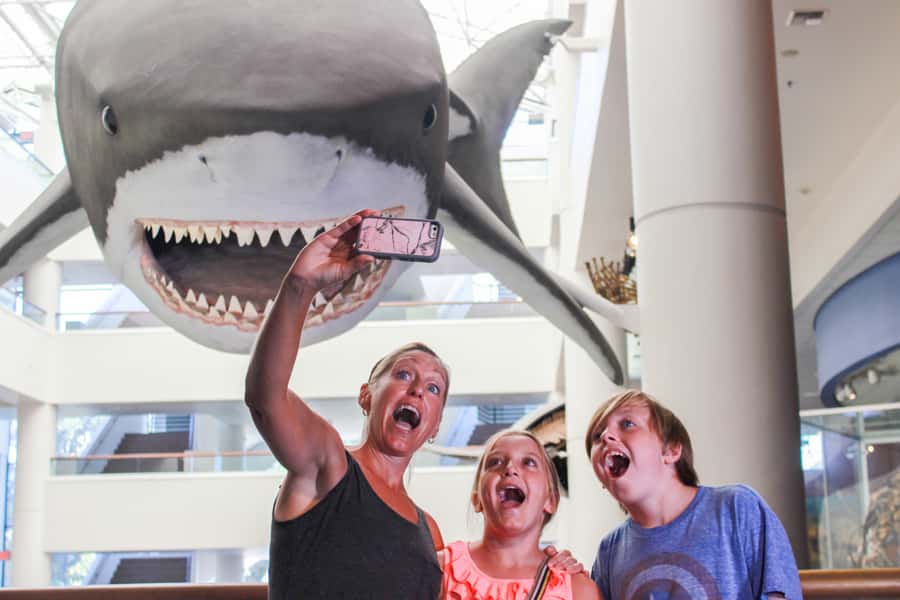
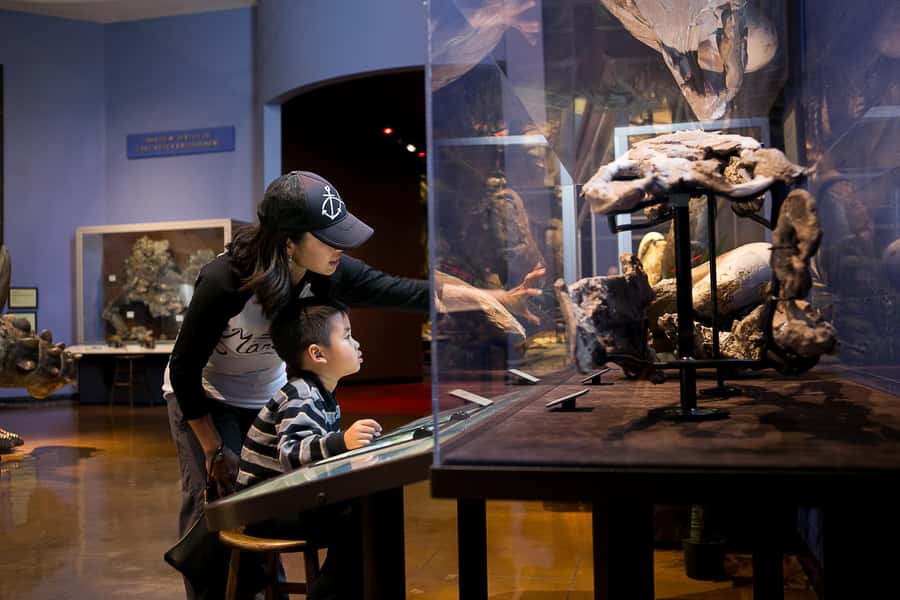
The main draw for many families is Fossil Mysteries. It traces 75 million years of natural history through fossils from Southern California and Baja California.
You will encounter the kind of subjects that make a museum visit instantly appealing: dinosaurs, megalodons, and mastodons. These displays help connect familiar images from prehistoric life with the particular ground beneath the region today.
The exhibition is also a good reminder that Southern California was not always dry, urban, or shaped by modern development. Over vast stretches of time, the area supported different animals and habitats. Fossils provide the evidence, and the museum uses them to tell a story that stretches far beyond human history.
I like this section for its broad time scale. You do not need a background in geology to enjoy it, but curious children and adults can spend longer studying how fossils are found and what they reveal.
The only drawback is that fossil displays can become crowded around the most famous specimens, especially when families are moving through together. If you want to read every label, allow extra time and do not expect to see the whole section at a brisk walk.
Expedition Baja and the science of a nearby wilderness
Expedition Baja shifts your attention from deep time to a living region just south of California. The Baja California Peninsula includes mountains, desert flats, and isolated islands, each with its own conditions and wildlife.
The exhibition follows researchers working to protect the peninsula’s natural character. That makes it valuable for visitors who want more than a display of animals. You get a sense of how scientists study difficult terrain and why isolated places can support unusual forms of life.
Baja is close to San Diego, yet much of it can feel remote. This exhibition gives you a way to understand that neighboring region without making a separate trip. It also fits well with the museum’s broader goal of showing how science can support conservation.
Take your time with the photographs, objects, and research stories. The strongest part of this section is the connection between place and scientific work. You are not simply looking at specimens. You are seeing how people try to understand and protect the areas where those specimens live.
Coast to Cactus in Southern California
Coast to Cactus in Southern California is one of the clearest expressions of the museum’s regional focus. It takes you through the coast, inland valleys, mountains, and deserts, showing how much life can exist across a relatively small part of the world.
This section works well for visitors who have arrived in San Diego for the beaches but want to understand more of the area. The city’s natural surroundings are not limited to the shoreline. The museum shows how conditions change as you move inland and upward, and how those changes affect plants and animals.
I would place this exhibition near the center of your visit, after the fossil displays and before the more specialized areas. It provides a useful bridge between prehistoric Southern California and the region you can see today.
The value here is not just the number of species on display. It is the way the exhibition encourages you to notice differences in climate, terrain, and habitat. You leave with a better sense of why the region supports such varied wildlife.
More museums in San Diego:
- San Diego: Maritime Museum of San Diego Admission
★ 4.6 · 17 reviews - San Diego Natural History Museum Nighttime Entry Ticket
★ 5.0 · 5 reviews - San Salvador 16th Century Galleon Sail w/ Museum Admission
★ 5.0 · 3 reviews - San Diego: Californian Tall Ship Sailing and Maritime Museum
★ 5.0 · 3 reviews
Living Lab: live animals with a slightly creepy appeal
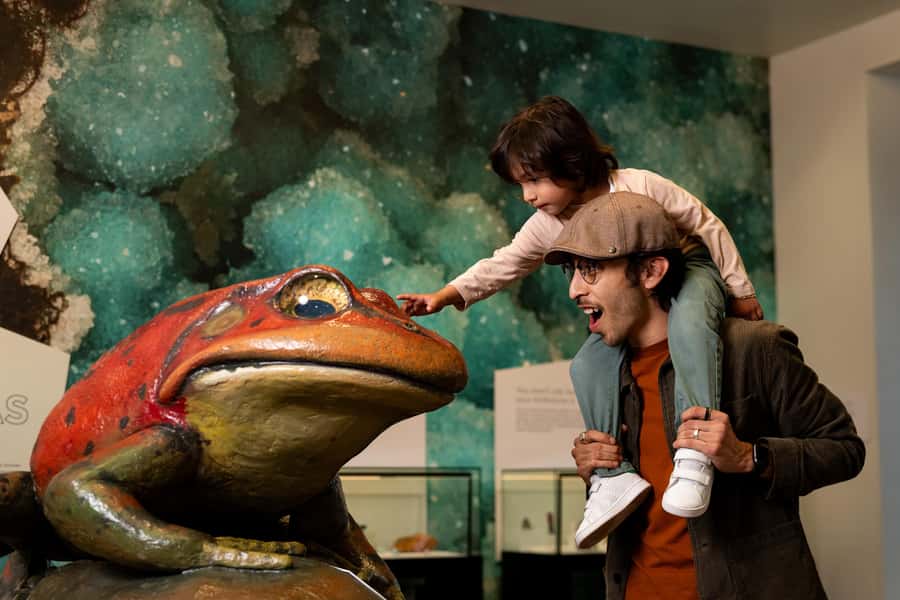
Living Lab brings the subject to life with more than 20 animals. The collection includes stinging scorpions and elusive nocturnal lizards, so this is not the soft and cuddly section of the museum.
That is part of the fun. A live scorpion can hold a child’s attention in a way that a picture cannot, and nocturnal animals give you a reason to slow down and look closely. This area can also help children move from general excitement to careful observation.
You might not see every animal immediately. Some creatures are elusive by nature, and the display is designed around animals that often hide or remain still. That can be a small frustration if you are hoping for constant movement, but it also reflects how these creatures actually behave.
For families, this is a strong section to pair with The Backyard. Older children may prefer the live animals and fossils, while very young children can play in a space made for their age group.
The Backyard for children ages 0 to 5
The Backyard is designed for the museum’s youngest visitors, ages 0 to 5. It offers play beneath a shade tree, hidden details along a wooden fence, and a cozy potting shed where children can read.
This area matters because natural history museums can be tiring for very young children. Many displays are arranged for adults and older children, with labels and cases that are difficult for toddlers to engage with. The Backyard gives little ones a chance to play, notice, and explore at their own level.
Parents can use this section as a reset during a longer museum visit. After fossils, photographs, and scientific displays, a quieter play area may help a young child stay interested rather than reaching the end of their patience.
It is not a substitute for the museum’s larger exhibitions, but it makes the building more practical for families with mixed ages. Older children can continue to the fossils while younger ones have a dedicated space nearby.
Unshelved and the odd beauty of museum storage

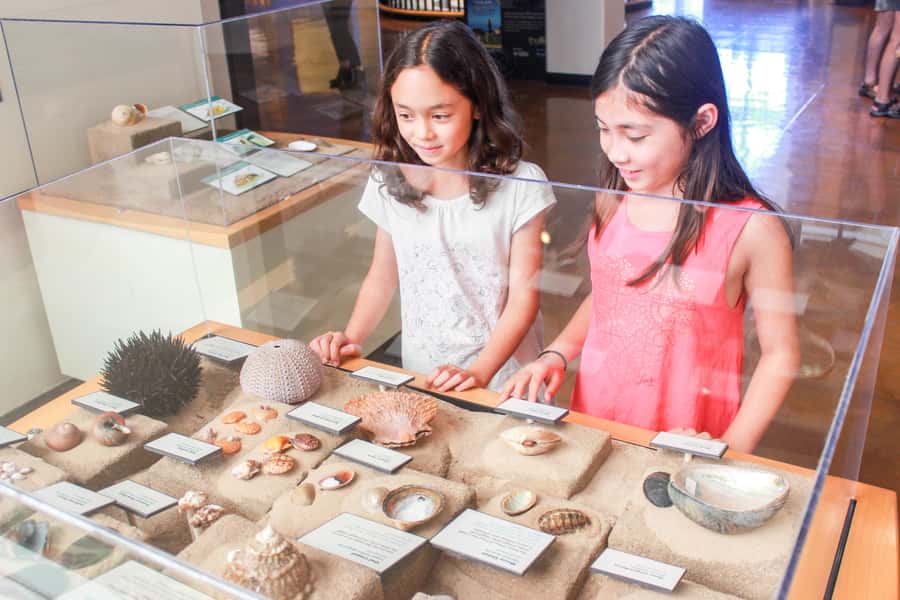
Unshelved: Cool Stuff from Storage offers a rare look at specimens that are not normally on the main exhibition floor. The objects show the variety and strangeness of the natural world, including examples chosen for their beauty or unusual appearance.
This is a good reminder that a museum collection extends far beyond what you see in permanent galleries. Storage is not simply a back room filled with unused objects. It can hold specimens that help researchers compare species, study change, and preserve records of the region.
The exhibition may appeal most to adults and older children who enjoy unusual details. It is less about one large story and more about the pleasure of looking closely at objects that might not fit a conventional display.
I would not rush through it. A storage-based exhibition can seem scattered if you walk past quickly, but it becomes more rewarding when you pause to ask why each item was kept and what it tells you about scientific collecting.
Citizen science and the museum’s working ideas
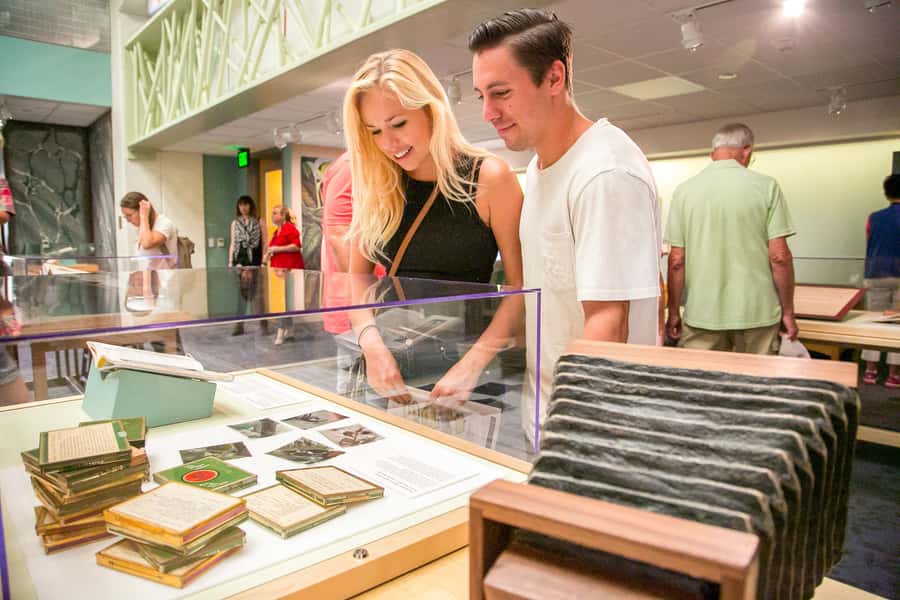
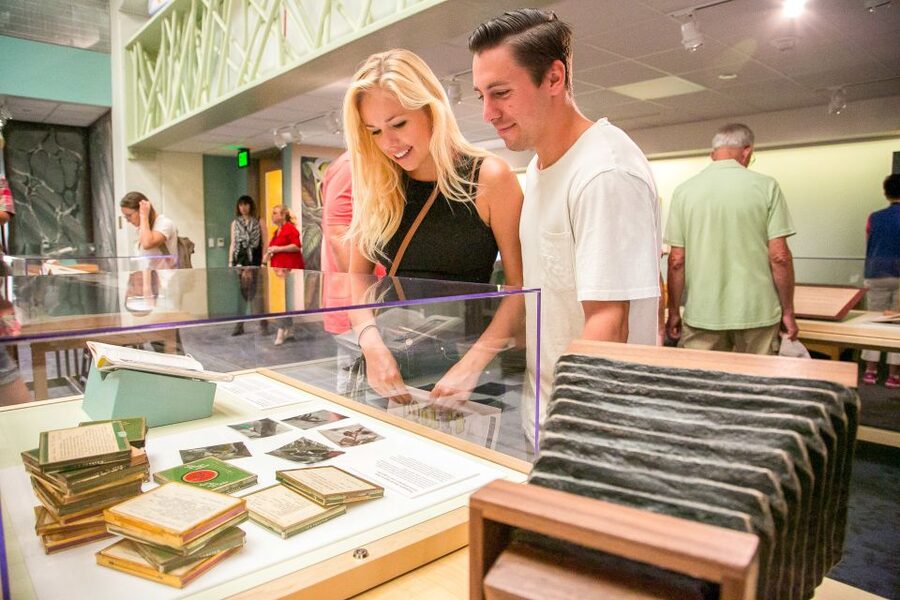
Extraordinary Ideas from Ordinary People: A History of Citizen Science explores how people outside professional science have contributed to research. The exhibition includes rare books, art, photographs, and historical documents.
This section gives the museum a wider purpose. Science is not presented as something done only by specialists in distant laboratories. Ordinary people can observe, record, collect information, and help build a clearer picture of the natural world.
The display may be especially interesting if you enjoy the history of ideas. It is less immediately visual than the dinosaurs or live animals, but it adds depth to the museum’s message about public participation.
You can also connect this exhibition with the museum’s current work. The Nat’s program includes chances to see scientists at work, so the building links past methods of observation with present-day research and public learning.
The giant-screen theater adds real value
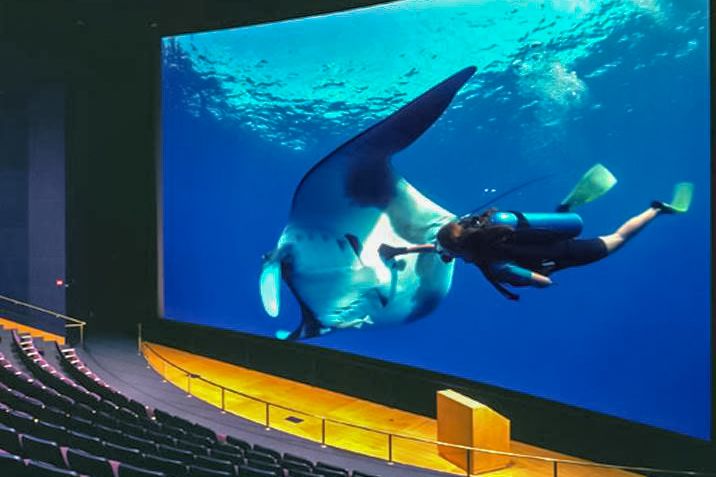
The museum’s 300-seat theater has stadium-style seating and a massive screen. Films are included with general admission, and the daily schedule includes T. REX, Wild San Diego, and Ocean Oasis.
This is one of the strongest reasons to consider the $12 ticket a good buy. A film gives you a change of pace after several floors of displays, and the theater can make a visit feel like a full cultural outing rather than a short museum stop.
The subjects also match the museum’s themes. T. REX connects with the fossil material, while Wild San Diego keeps the focus close to home. Ocean Oasis expands the view toward marine environments.
Check the film times when you arrive because the ticket is valid for one day and the schedule may shape how you arrange the rest of your visit. If you have only a short window, the theater may require you to skip or shorten an exhibition. If you have several hours, it is an easy way to add variety.
Small details that reward a slower look
The Nat’s only Foucault pendulum is another distinctive feature. It demonstrates the movement of the Earth in a simple, visible way and gives you a moment of physics inside a museum focused mainly on biology, geology, and regional nature.
You can also find places to pause during the visit. The Craft Taco offers food, while Gold Leaf sells distinctive gifts. These options are useful if you want to keep the museum as the center of your Balboa Park time instead of leaving to find a meal or souvenir elsewhere.
The food and shop are extras, not reasons alone to buy a ticket. Still, they make the visit easier to manage, especially if you are spending much of the day in the museum.
The building also has a schedule of events and activities that changes over time. Since the ticket covers general admission, it is worth checking what is happening on your chosen day before you arrive. The permanent exhibitions provide the foundation, while films, events, and temporary displays can change the feel of the visit.
Price, timing, and practical planning
At $12 per person, admission is modest for a museum with four floors and included films. The value is strongest if you plan to stay long enough for several exhibitions and one screening.
If you only want to see the largest fossils, you may finish quickly and feel less benefit from the full ticket. If you enjoy moving between science, live animals, film, and regional history, the price is easier to justify.
The ticket is valid for one day. Starting times depend on availability, so check the schedule when booking rather than assuming you can arrive at any hour. A printed voucher is required, and the meeting point can vary by the option selected.
English is the stated language for the host or greeter and the activity information. The museum is wheelchair accessible, but one visitor described a serious problem with an elevator door and difficulty using stairs because of an injured ankle. If you depend on step-free access, speak with staff at the start of your visit and confirm the best route between floors.
Pets are not allowed. The experience ends back at the meeting point, and cancellation is free up to 24 hours in advance. You can also reserve now and pay later, which helps if your Balboa Park plans are still changing.
Who will get the most from The Nat
I would recommend this museum to families, science-minded adults, and anyone who wants a break from San Diego’s usual beach-and-city routine. Children who think museums are boring have several ways to stay involved, from dinosaurs and live scorpions to the Backyard and giant-screen films.
It also suits couples looking for a low-cost indoor activity. A visit can be educational without feeling like a formal lesson, and the theater gives you an easy shared experience.
The museum may be less satisfying if you want one short, tightly focused exhibition. There are many subjects here, from fossils to citizen science, so the experience feels broad rather than narrowly themed.
Should you book this museum ticket?
Book it if you want a flexible Balboa Park activity with more substance than a quick photo stop. The combination of fossils, live animals, regional science, and included films gives the $12 admission strong value.
Plan for several hours, check the film schedule, and use the museum’s sections according to your interests. Families should make time for The Backyard, while adults and older children may prefer Baja, citizen science, and the archive displays.
Skip it only if your San Diego schedule is packed and you can spare little more than a brief visit. The Nat rewards time. Given the low price and the range of exhibitions, it is an easy choice for a relaxed day of learning in Balboa Park.
FAQ
How much does admission cost?
The ticket costs $12 per person.
How long is the ticket valid?
The ticket is valid for one day. Starting times depend on availability.
What does general admission include?
General admission includes access to the San Diego Natural History Museum’s exhibitions and films in the giant-screen theater.
Which films are shown?
The daily films include T. REX, Wild San Diego, and Ocean Oasis.
What are the main exhibitions?
Exhibitions include Fossil Mysteries, Expedition Baja, Living Lab, The Backyard, Unshelved, Action from the Archives: The Nat at 150, Extraordinary Ideas from Ordinary People, and Coast to Cactus in Southern California.
Is the museum wheelchair accessible?
Yes, the activity is listed as wheelchair accessible. If you need step-free access, ask museum staff for assistance because one visitor reported difficulty with an elevator door.
Do I need a printed voucher?
Yes. A printed voucher is required.
Are pets allowed?
No. Pets are not allowed.
More History Tours in San Diego
- San Diego’s Gaslamp Quarter Historic True Crime Tour
★ 4.5 · 230 reviews - Historic La Jolla Walking Tour
★ 5.0 · 124 reviews - San Diego to Temecula: Wine Country Tour & Historic Old Town
★ 5.0 · 93 reviews - San Diego Coronado History and Highlights Small Group Tour
★ 5.0 · 72 reviews
Just added around San Diego
- An Art Walk Through the Barrio★ 5.0 · 11 reviews
- All-Inclusive Private Wine Tour in Baja★ 5.0 · 3 reviews
- All Day San Diego Scenic Tour★ 3.0 · 5 reviews
- 4 Hour Private Sail for up to 6 people★ 5.0 · 12 reviews
- Private Vacation Photography Session with Local Photographer in San Diego★ 5.0 · 4 reviews
- Two Hour Kayak and Snorkel Tour for Two in La Jolla★ 4.5 · 34 reviews
- Ultimate La Jolla Self-Guided Driving & Walking Audio Tour Bundle★ 3.5 · 9 reviews
- 2Hr GPS Self Guided Scooter Tour: Downtown & Balboa Park★ 4.0 · 6 reviews
San Diego Museum Tickets, compared.




San Diego Natural History Museum Nighttime Entry Ticket
Read our review →
Californian Tall Ship Sailing and Maritime Museum
Read our review →
San Salvador 16th Century Galleon Sail w/ Museum Admission
Read our review →Browse the lists this tour appears in