
Reviewed · SAN DIEGO WALKING TOURS
San Diego Walking Tour: Balboa Park with a Local Guide
Balboa Park is much more than a collection of museums. It is a 1,400-acre civic experiment filled with grand façades, odd exposition stories, quiet gardens, and details easy to miss when you are walking alone. This tour gives you the park’s big picture while pointing out the small touches that make it memorable.
I like the clear two-hour route, which covers major sights without trying to force museum visits into the schedule. I also like the local coffee-cart stop and the way the tour mixes architecture with stranger tales, including Zoro Garden’s former life as a nudist colony. The main drawback is simple: $60 is a fair price only if you value a guide’s context, since museum admission and extra food are not included.
Key points at a glance
- The 1915 Panama-California Exposition shapes the walk, especially around the California Tower and Alcázar Garden.
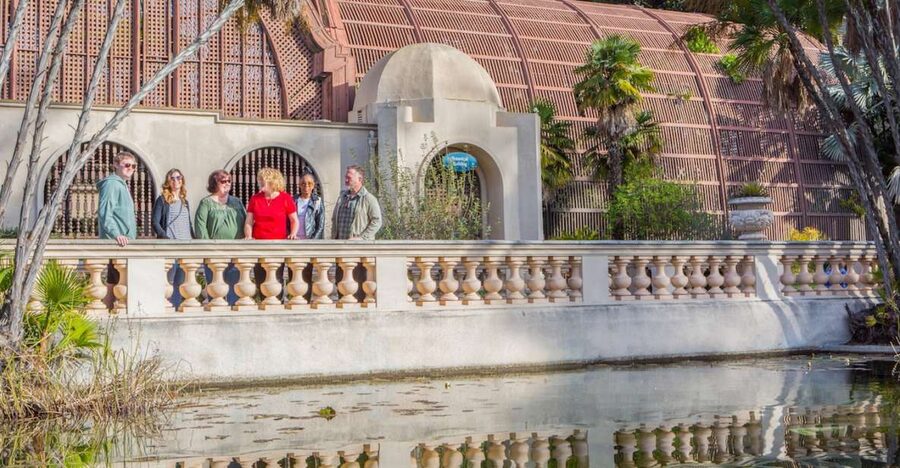
- A local guide explains overlooked details, from roof supports in the Prado to the war-era purpose of the lily pond.
- The route includes a drink from a park coffee cart, a welcome pause during the walk.
- Spanish Village Art Center adds a human touch, with artists working in their studios.
- The pace is leisurely, with frequent stops for stories, photos, and questions.
- Jennifer and Brooke have led this walk, both known for humor, clear explanations, and an easy conversational style.
Why a guided walk helps in Balboa Park
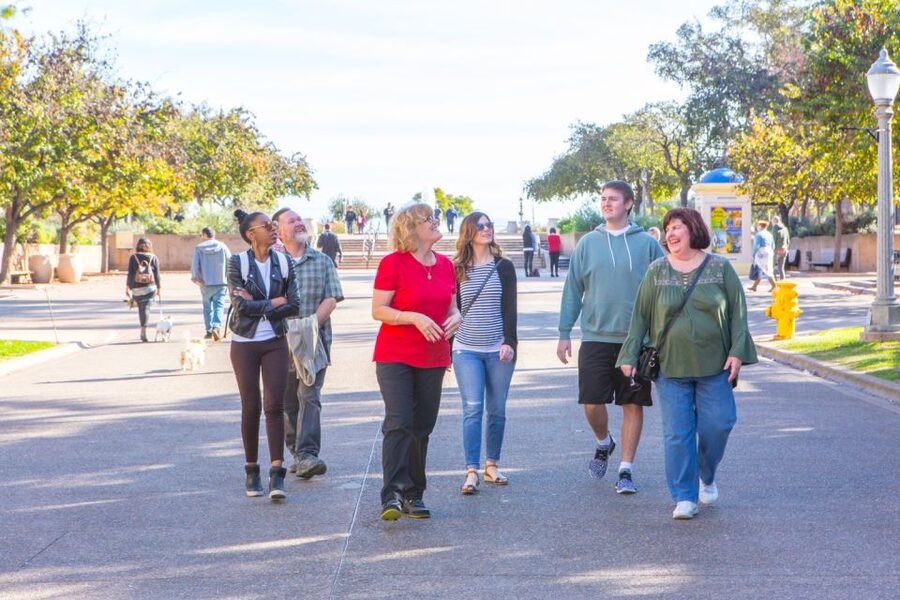
Balboa Park can feel confusing at first. You have museums, theaters, gardens, fountains, courtyards, bridges, and several roads spread across a large area. It is easy to admire the buildings without understanding why they look so different from one another.
A guide gives you a useful framework. You learn that much of the park’s Spanish Colonial Revival appearance was shaped by the 1915 Panama-California Exposition and the 1935 California Pacific International Exposition. Those events were not just temporary fairs. They helped define how San Diego presented itself to the country and left behind the architectural character you see today.
I especially like that this is not a museum-heavy tour. You are not hurried through indoor galleries or asked to absorb a stack of dates. Instead, the guide uses the buildings, gardens, and public spaces around you as the teaching material. That makes the walk a good first activity in San Diego, since you finish with a practical sense of what deserves a return visit.
The tour has been led by Jennifer and Brooke. Jennifer’s approach is described as funny, engaging, and clear, while Brooke is known for enthusiasm and a strong feel for the park and city. The best part of this style is the conversation. You can ask about a building, a plant, a restaurant, or something you noticed along the way instead of listening to a fixed speech from start to finish.
More walking tours in San Diego:
- Intro to Mexico Walking Tour: Tijuana Day Trip from San Diego
★ 4.5 · 616 reviews - Tijuana Local Walking Tour from San Diego
★ 4.5 · 283 reviews - Tequila, Tacos & Tombstones: Old Town Food & Drink Walking Tour
★ 4.5 · 225 reviews
Meeting at Founder’s Plaza and Cabrillo Bridge
The meeting point is at Founder’s Plaza near the west entrance, around 698 El Prado. The address can be confusing on map apps, so use Sefton Plaza if needed. Once you arrive, look for three male statues at the only sloped corner near Balboa Drive and El Prado.
This is the one part of the experience that deserves extra care. Rideshare drivers sometimes stop at the wrong statue, and the meeting point is not simply a standard museum entrance. Check the drop-off location before you leave your hotel, and arrive with enough time to orient yourself.
The walk begins with a short introduction and safety briefing, then moves toward Cabrillo Bridge. This gives you an immediate sense of Balboa Park as a planned civic space rather than a random group of attractions. From here, the guide starts connecting the park’s open areas with its fairs, institutions, and public life.
If you drive, allow time to find a space and pay at a kiosk or through the Park Smarter app. Parking along Balboa Drive and El Prado can cost $10 for the day, and planning on at least three hours gives you breathing room for the tour and any extra exploring afterward.
California Tower and Alcázar Garden
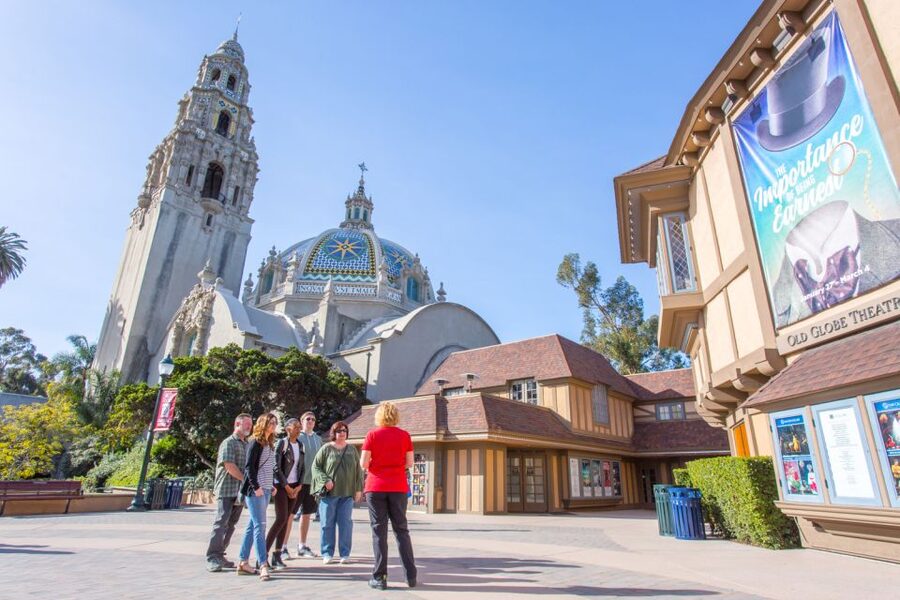
The California Tower is one of the walk’s main visual anchors. Built for the 1915 Panama-California Exposition, it has become one of San Diego’s most familiar landmarks. Its decorative face also tells part of the city’s early story, so the tower works as both architecture and a history lesson.
This is a good place to listen closely rather than simply take a picture. The tower’s details make more sense when you understand that the exposition was designed to present San Diego as a city with a distinctive Spanish and Mexican visual identity. The guide helps separate what was created for the fair from what became part of the park’s lasting character.
Alcázar Garden follows, inspired by the gardens of the same name in Spain. It served fairgoers during both the 1915 and 1935 expositions as a calm place away from the crowds. Today, it provides one of the best foregrounds for photographing the California Tower.
Bring a phone or camera, but do not rush this stop. The value is partly visual and partly practical. Your guide can show you how the tower, paths, planting, and garden lines work together in a photograph, saving you from wandering around looking for the most balanced view.
The Old Globe and the Prado’s overlooked details
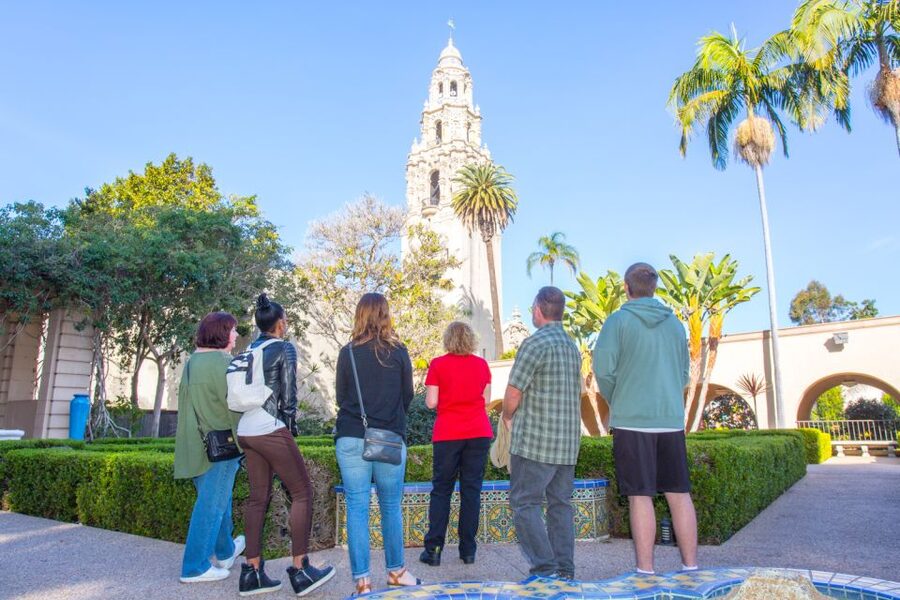
The Old Globe is the next major stop. This Tony Award-winning professional theater group was modeled after London’s Globe Theatre, giving the park another layer beyond museums and gardens. You will learn how the theater fits into Balboa Park’s cultural life rather than treating it as just another attractive building.
From there, the route enters the heart of the Prado. This is where a guide earns the ticket price. Most people naturally look at the large façades, towers, and courtyards. A local guide also draws your eye upward and sideways to unusual roof supports, decorative details, and building features that are easy to pass without a second thought.
The walking pace is leisurely, with regular stops. That matters because the Prado is not a place to sprint through. You need a moment to look up, compare façades, and notice how much decoration was built into spaces that could easily have been plain.
The route is also flexible enough for questions. If you are interested in architecture, the exposition era, gardens, or San Diego history, you can steer some of the conversation. The tour is not designed as a private deep study of one subject, but it gives you a solid overview and plenty of prompts for later visits.
More Balboa Park tours:
- San Diego Balboa Park Highlights Small Group Tour with Coffee
★ 5.0 · 173 reviews - Private Balboa Park Segway Tour
★ 5.0 · 153 reviews - 2-Hour GoCar Tour of Downtown and Balboa Park
★ 4.5 · 64 reviews - Balboa Park Electric Scooter Tour with Pictures
★ 5.0 · 59 reviews
Zoro Garden and the park’s stranger stories

Zoro Garden is one of the most memorable stops because its past is unexpected. During the 1935 California Pacific International Exposition, the sunken garden was used as a nudist colony. Today, it is a butterfly garden designed to provide what butterflies need through their full life cycle.
That change gives the guide a chance to explain how public spaces can be reused and reinterpreted. It also keeps the walk from becoming a string of formal architectural descriptions. A good tour needs a few odd stories, and this one is hard to forget.
The garden is not presented only as a curiosity. You also learn how its current purpose works, which makes the stop useful for families and anyone interested in plants or small wildlife. Children under six are not allowed on the tour, but older children may appreciate the unusual story and the butterfly setting.
The route then passes the Bea Evenson Fountain and the San Diego Natural History Museum. You will not enter the museums, so think of these stops as orientation points. Your guide can explain what each institution offers and help you decide which one deserves a separate visit.
Spanish Village Art Center and the included coffee stop
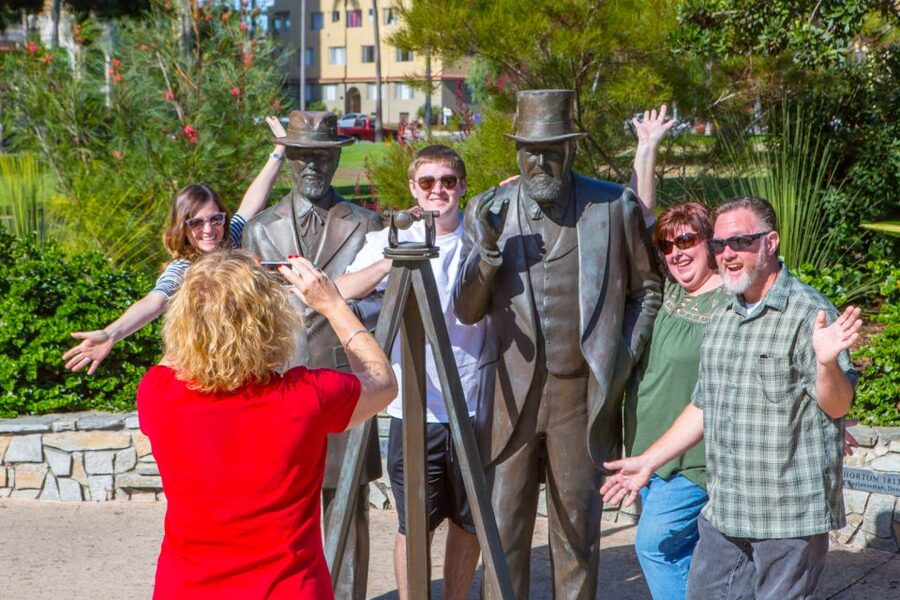
Spanish Village Art Center adds a welcome change of pace. Instead of looking only at finished public buildings, you can observe artists working in their studios. The center gives the tour a more local, working character, and it is a useful place to note if you want to return for art, browsing, or a small purchase.
There is also free time here for shopping and sightseeing. Do not expect a long independent break, since the walk continues after roughly 15 minutes, but you have enough time to look around and see how the studios fit into the park’s cultural mix.
The included beverage from a local coffee cart comes after you have covered a good stretch of the park. This is a small benefit, but a smart one. A drink gives you a short reset without requiring you to leave the route or find a café on your own.
Food beyond that beverage is not included. If you need a meal, plan to eat before or after the tour, or ask the guide for suggestions at the end. The guide also provides a resource list with recommendations, which is useful if you want to turn the walk into a full day in Balboa Park.
The Moreton Bay Fig Tree and Botanical Building
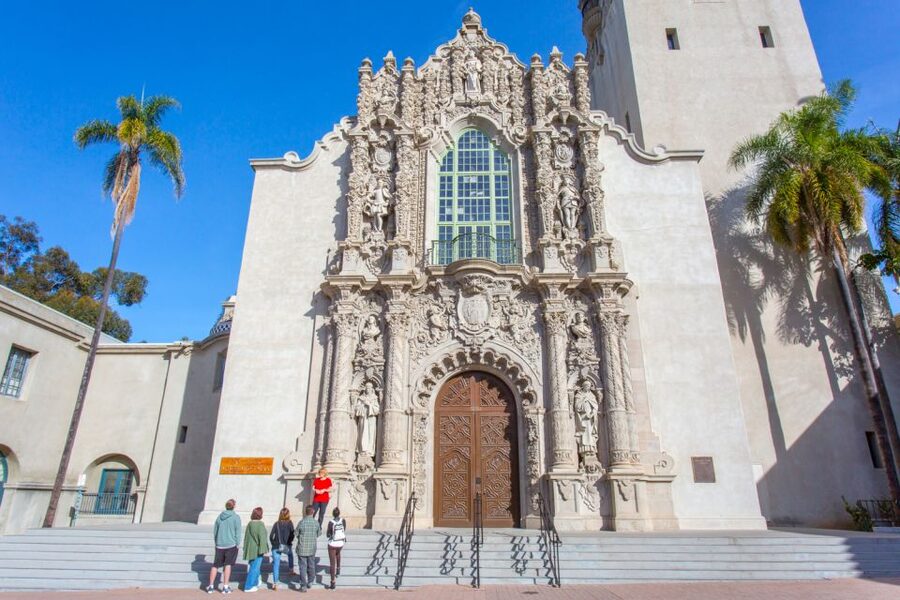
The Moreton Bay Fig Tree is another quick but worthwhile stop. It is one of the largest examples of its kind in California, and its scale gives you a break from the formal architecture. The tree also helps show how varied Balboa Park can feel from one section to the next.
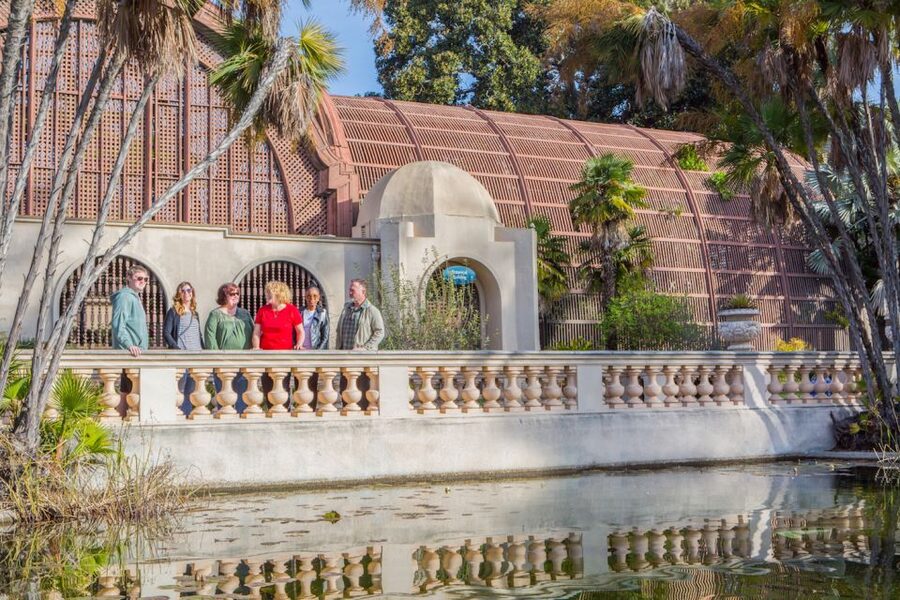
The route passes San Diego Junior Theater before reaching the Botanical Building and the adjacent lily pond. This is one of the prettiest parts of the walk, but the guide adds more than a photo opportunity.
The lily pond had a role in the war effort during World War I and helped injured sailors and soldiers during World War II. That information changes how you see the pond. What looks like a decorative feature also connects the park to periods when public institutions and open spaces served practical civic needs.
The Botanical Building gives you another chance to focus on structure, plants, and the way the park combines culture with gardens. Some buildings, gardens, or roadways can occasionally close for special events or maintenance. If that happens, the route includes an alternative.
Ending at Plaza de Panama
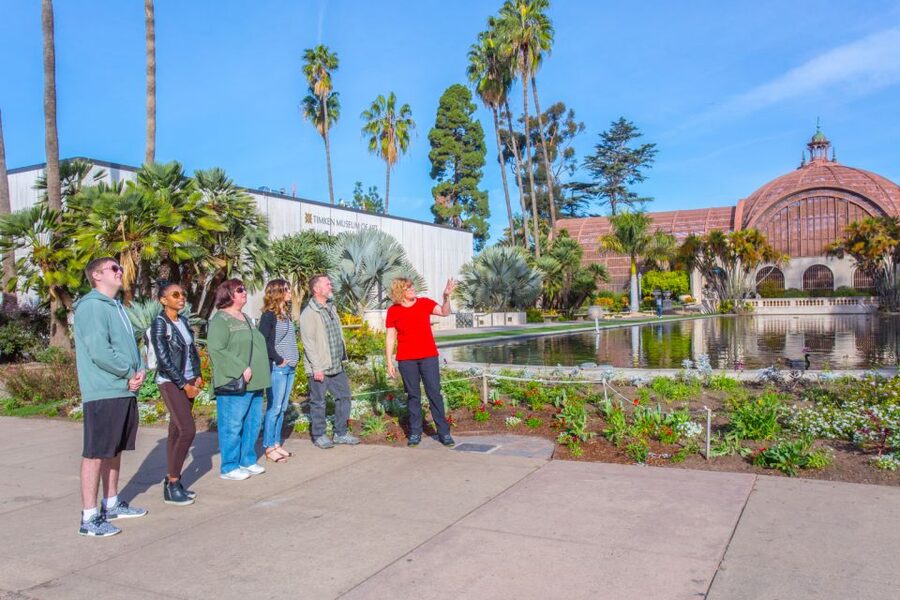
The tour finishes at Plaza de Panama, a central location that makes it easy to continue exploring. Before you go, the guide provides directions to the nearby Visitor Center, where you can find snacks, maps, souvenirs, and museum passes.
You also receive suggestions for places to eat and ideas for what to see next. This is a real advantage if Balboa Park is your first stop in San Diego. You can use the rest of the day more efficiently instead of walking from museum to museum without a plan.
The tour does not include museum entry. I see that as a sensible choice for a two-hour orientation walk. Museums require their own time, and forcing admission into this schedule would make the walk rushed. The tradeoff is that you will need to pay separately and return on your own if you want to visit the Natural History Museum or another institution.
Is $60 a fair price?
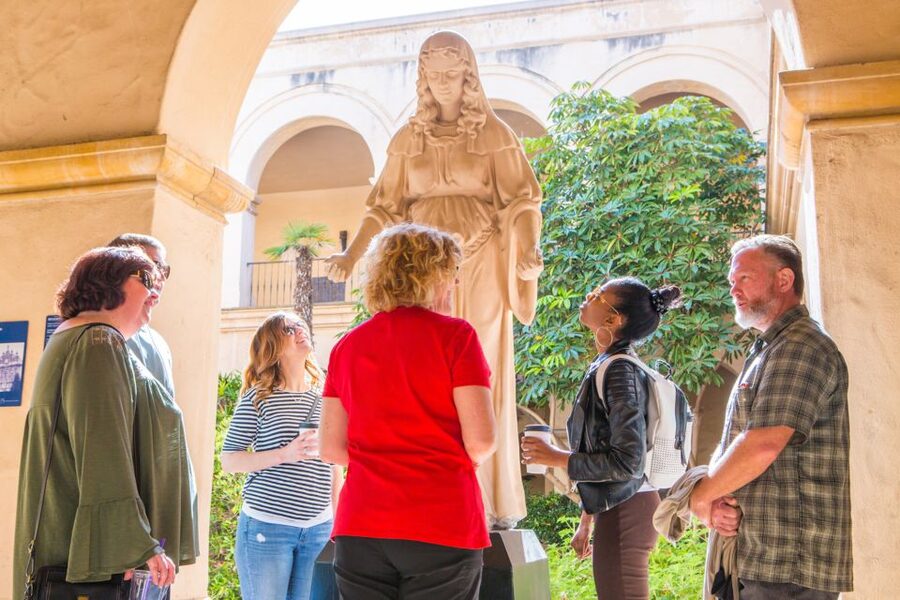
At $60 per person, this is not the cheapest way to walk through a public park. You can enter Balboa Park without paying for a general admission ticket, and many of its outdoor areas are free.
The price makes more sense if you want interpretation rather than simple access. You receive two hours with a local English-speaking guide, one park coffee-cart beverage, an organized route through several major areas, and a resource list for planning the rest of your visit. You also avoid spending your first hour trying to understand the park’s layout.
I would consider the tour good value for first-time visitors, short stays, and anyone who likes architecture and local stories. It is less appealing if you already know Balboa Park well, prefer exploring alone, or plan to spend the entire day inside museums.
The high overall rating is supported by a consistent pattern: the guides are praised for clear explanations, humor, a comfortable pace, and a willingness to answer questions. One particularly useful point is that the pace suits a relaxed morning rather than a forced march.
Practical advice before you go
Wear comfortable shoes and casual clothing suited to the current weather. The tour lasts two hours and includes walking between several parts of the park, so footwear matters more than dressing up.
The experience is wheelchair accessible. Still, you should confirm current conditions if you have specific mobility concerns, since gardens, roads, or buildings can occasionally be affected by maintenance or special events.
Children under six cannot join. Older children may enjoy the unusual stories, butterfly garden, fountains, and large tree, while adults interested in architecture and exposition history will get the most from the commentary.
The tour is conducted in English. Free cancellation is available up to 24 hours before the start, and you can reserve now and pay later, which helps if your San Diego schedule is still shifting.
Who should book this Balboa Park walk?
Book it if you want an organized first look at Balboa Park, especially if you have only a short time in San Diego. It is also a good choice for people who enjoy buildings, gardens, civic history, and stories that do not appear on a standard map.
I would recommend it to couples, families with children over six, solo visitors, and local residents who have always meant to understand the park better. You do not need to be an architecture expert. The guide keeps the tone friendly and includes enough humor to prevent the history from becoming a lecture.
Skip it if you want museum admission included, need a food-focused outing, or prefer a completely self-guided walk. At $60, the tour earns its keep through explanation and organization, not through exclusive entry.
For most first visits, I would book it early in your stay, ideally in the morning. You will learn where the major buildings are, find the best photo spots, and leave with a practical plan for returning to the museums and gardens that interest you most.
FAQ
How long does the Balboa Park walking tour last?
The tour lasts two hours.
What language is the tour conducted in?
The live tour is conducted in English.
Where does the tour meet?
It meets at Founder’s Plaza near the west entrance to Balboa Park, around 698 El Prado. If that address does not appear on your map, use Sefton Plaza and look for three male statues near Balboa Drive and El Prado.
Where does the tour finish?
The walk ends at Plaza de Panama.
Is a beverage included?
Yes. The tour includes one beverage from a local coffee cart.
Are museum admissions included?
No. Museum entry is not included. Your guide provides suggestions for returning to the museums independently.
Is the tour wheelchair accessible?
Yes, the activity is listed as wheelchair accessible.
Can children under six join?
No. Children under six are not permitted on the tour.
What should I bring?
Bring comfortable shoes and clothing suited to the current weather.
Can I cancel for a full refund?
Yes. You can cancel up to 24 hours in advance for a full refund.
Just added around San Diego
- An Art Walk Through the Barrio★ 5.0 · 11 reviews
- All-Inclusive Private Wine Tour in Baja★ 5.0 · 3 reviews
- All Day San Diego Scenic Tour★ 3.0 · 5 reviews
- 4 Hour Private Sail for up to 6 people★ 5.0 · 12 reviews
- Private Vacation Photography Session with Local Photographer in San Diego★ 5.0 · 4 reviews
- Two Hour Kayak and Snorkel Tour for Two in La Jolla★ 4.5 · 34 reviews
- Ultimate La Jolla Self-Guided Driving & Walking Audio Tour Bundle★ 3.5 · 9 reviews
- 2Hr GPS Self Guided Scooter Tour: Downtown & Balboa Park★ 4.0 · 6 reviews
San Diego Walking Tours, compared.

Intro to Mexico Walking Tour: Tijuana Day Trip from San Diego
Read our review →
Tequila, Tacos & Tombstones: Old Town Food & Drink Walking Tour
Read our review →
Browse the lists this tour appears in