
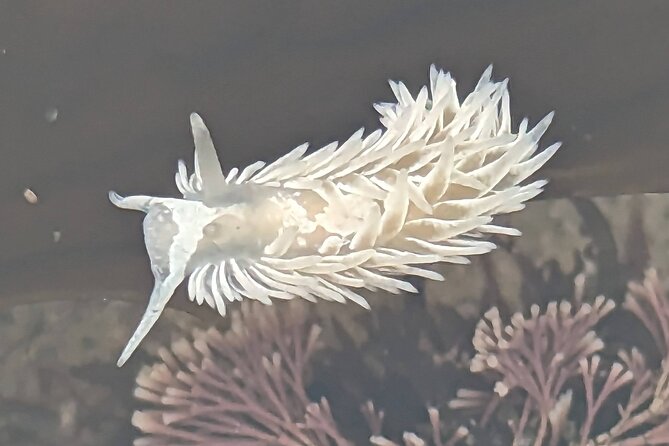
Reviewed · SAN DIEGO SNORKELING TOURS
Explore San Diego Tide Pools with a Marine Biologist
La Jolla’s tide pools turn a strip of rocky shoreline into a small marine classroom. Marine biologist and former teacher Matt helps you spot creatures you could easily miss, then explains how they survive hours of sun, waves, and changing water levels. I like the hands-on science without handling live animals and the digital photo album that lets you remember what you found.
I also like the way Matt adjusts his explanations for young children and adults. Families with children as young as two, older children, grandparents, and solo visitors have all fit into the hour. The main drawback is the footing: sandstone and wet rocks can be awkward, and closed-toe shoes or strapped sandals that may get wet are required.
Key points to know before booking
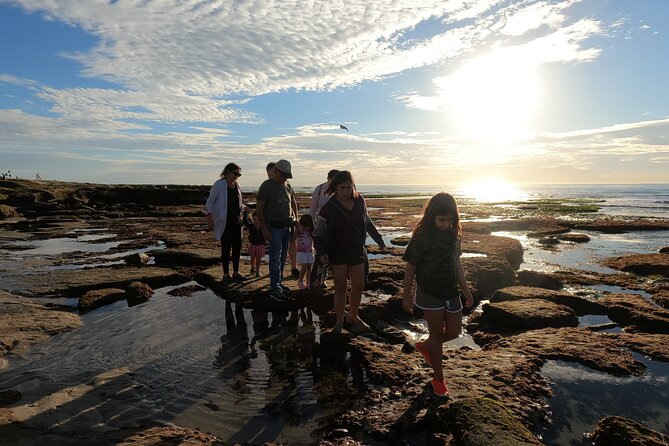
- A real marine biology lesson: Matt brings a conservation biology background and years of classroom experience to the shore.
- A compact one-hour outing: The tour begins and ends at 333 Coast S Boulevard in La Jolla.
- Small-group attention: No more than 15 people can join, which helps Matt answer questions and keep children involved.
- Respect comes first: You receive a safety talk, and all living marine life is left alone under a strict no-collection policy.
- Bring the right footwear: Wet, uneven rocks make flip-flops a poor choice. Use closed-toe shoes or secure sandals.
- Good value at $32: You pay for a trained guide, careful wildlife spotting, instruction, and a digital photo album.
La Jolla’s tide pools are the main event
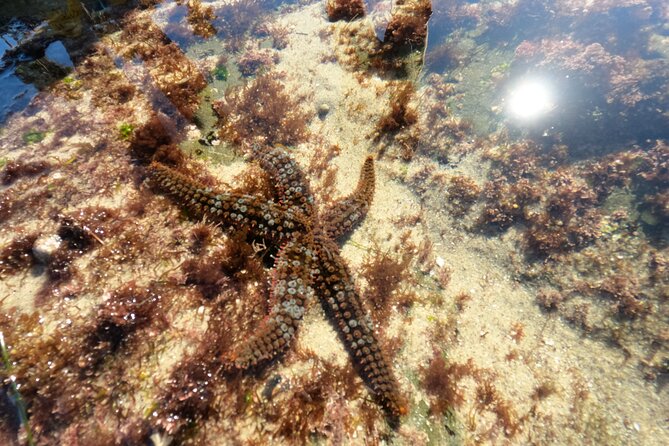
A tide pool is a pocket of seawater left behind when the ocean pulls back. The rocky intertidal zone is covered during high tide and exposed during low tide, so its plants and animals must cope with conditions that change quickly.
That is what makes the setting so interesting. A pool may hold tiny fish, snails, hermit crabs, anemones, and other small creatures, yet each one has a different way to deal with sun, waves, salt, and a lack of water. You are not simply looking at a puddle beside the beach. You are seeing a small ecosystem under pressure.
The tour is especially useful if you have walked past tide pools before and seen only rocks and seaweed. Matt knows where to look and what signs to watch for. He can point out a creature partly hidden in a crevice or explain why a plant or animal stays in one part of the pool rather than another.
That skill is the heart of the experience. On your own, you may see something unusual but not know what it is, or you may overlook it completely. With a marine biologist beside you, the shoreline becomes easier to read.
More snorkeling tours in La Jolla:
- Snorkeling Adventure in La Jolla
★ 4.5 · 204 reviews - La Jolla: 2.5-Hour Kayak and Snorkel Tour
★ 4.1 · 165 reviews - La Jolla Kayak and Snorkel Tour
★ 4.0 · 117 reviews
Meeting Matt at 333 Coast S Boulevard
You meet at 333 Coast S Boulevard, La Jolla, and the tour returns to that same point. The activity is offered in English, and your mobile ticket keeps the arrival process simple.
At the start, Matt gives a short talk about safety and tide pool etiquette. This is not filler. The rocks can be wet, and the area is a fragile habitat, so knowing where to step and how to behave matters.
The central rule is simple: do not collect anything. You should not remove shells, animals, plants, or other natural objects from the pools. Living marine life is not handled or disturbed, in line with the stated animal welfare policy.
This approach gives the tour a useful conservation lesson. You are learning how to observe rather than take. That is a habit you can carry to other tide pools after the tour ends.
What the one-hour outing feels like
The experience is short, focused, and active. After the safety briefing, you move along the rocky intertidal area while Matt identifies plants and animals and explains their adaptations.
The pace is not built around a long lecture. You look, ask questions, and move on when there is something else to see. Families have found that the structure works well for children because the subject keeps changing. One moment you may be looking at a hermit crab, and the next you may be examining an anemone, snail, fish, or seaweed.
Matt’s background as a teacher is useful here. He has taught marine biology for 17 years, and his explanations are designed to make sense to different ages. He can give adults more detail while keeping younger children involved with clear language and humor.
That matters more than it might sound. A tide pool outing can lose a child quickly if it becomes a list of scientific names. This tour aims to connect each animal to a practical survival problem: staying wet, avoiding predators, holding onto rock, or finding food.
The hour also works for adults who want a relaxed introduction rather than a formal field course. You can ask questions as you go, and the pace allows room for curiosity. The activity is not described as strenuous, but the rocks require care and balance.
The creatures you might find
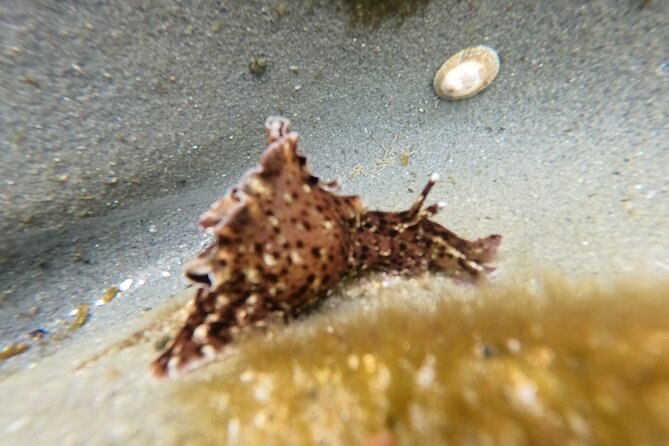
The exact animals vary with conditions, tide timing, and the day’s luck. The experience is built around discovering what is present, not promising a fixed list of sightings.
The provided information and guest feedback point to a range of small marine life, including fish, anemones, snails, hermit crabs, sea hares, and other invertebrates and plants. The value is not just in seeing these animals. It is in understanding how they fit into the pool.
Hermit crabs can be a memorable find for children, especially because their borrowed shells make their behavior easy to understand. Anemones offer a chance to talk about animals that look plant-like but are not plants. Small fish and snails show how much life can occupy a narrow stretch of shoreline.
You may also encounter shells, molts, or dead marine material that can be examined without disturbing a living animal. Matt’s guidance helps you tell the difference between something safe to observe closely and something that should be left alone.
Do not expect an aquarium-style display where everything is guaranteed to appear on demand. Tide pools are wild and changeable. The right attitude is to enjoy the search and let Matt explain whatever the water and rocks reveal that day.
More La Jolla tours and rentals:
- La Jolla Sea Caves Kayak Tour For Two (Tandem Kayak)
★ 4.5 · 1,205 reviews - Original La Jolla Sea Cave Kayak Tour for Two
★ 4.5 · 871 reviews - La Jolla: 2-Hour Kayak Tour of the 7 Caves
★ 4.5 · 586 reviews - SoCal Riviera Electric Bike Tour of La Jolla and Mount Soledad
★ 5.0 · 438 reviews
Why the guide makes a difference
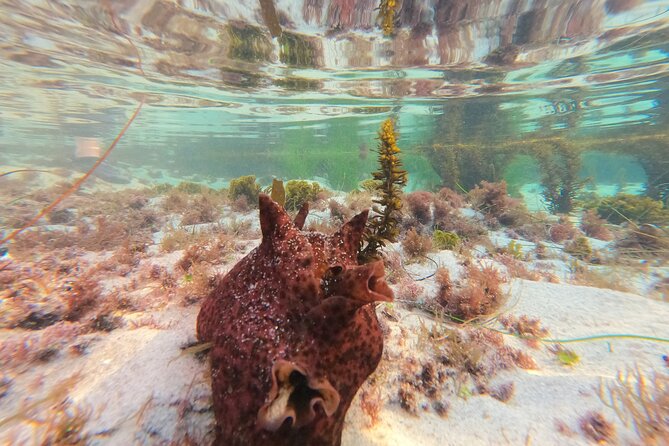
The guide is the reason to choose this activity instead of simply visiting the tide pools on your own. La Jolla’s shoreline is free to explore independently, but finding animals and understanding them is a different matter.
Matt has a conservation biology background and a long teaching career. He is also described as patient with children and comfortable answering questions from adults. That combination gives the outing both structure and warmth.
For parents, the child-friendly approach is a practical benefit. Children in the four-to-11 age range have been especially well served, but the activity has also worked with a three-year-old and a five-year-old. Very young children may not follow every explanation, yet the chance to look for real animals gives them something concrete to do.
For adults, the tour is not reduced to a children’s activity. Matt can explain the wider marine ecosystem and point out details that even people familiar with tide pools may miss. That makes the outing worthwhile for a mixed-age group, rather than something one adult simply tolerates for the children.
Solo visitors and couples can also fit in well. The maximum group size is 15, small enough for questions but large enough to have a social feel. If you prefer complete quiet and private exploration, a group tour may feel less personal. If you like learning alongside other curious people, the format is a good match.
Shoes, footing, and weather
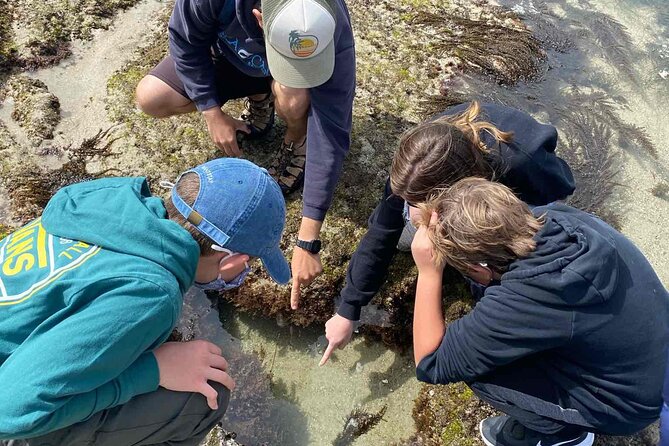
Take the footwear warning seriously. You need closed-toe shoes or strapped sandals that can get wet. Flip-flops and loose sandals are poor choices on wet sandstone because they offer little protection or grip.
Comfort matters too. You will be walking over uneven rock and may need to place your feet carefully. A pair of sturdy water-friendly shoes is the safest choice. Expect your footwear to get wet even if you try to stay near the edge of the pools.
The experience requires good weather. If poor weather cancels the activity, you are offered another date or a full refund. On cooler days, especially in winter, bring a coat for the breeze near the water.
The tour may suit most people, but it is not the same as strolling on a paved path. Anyone in your group who has difficulty walking on uneven, wet rock should consider that before booking. The information says most people can participate, but it does not promise a fully accessible route.
Photos, questions, and what you take home
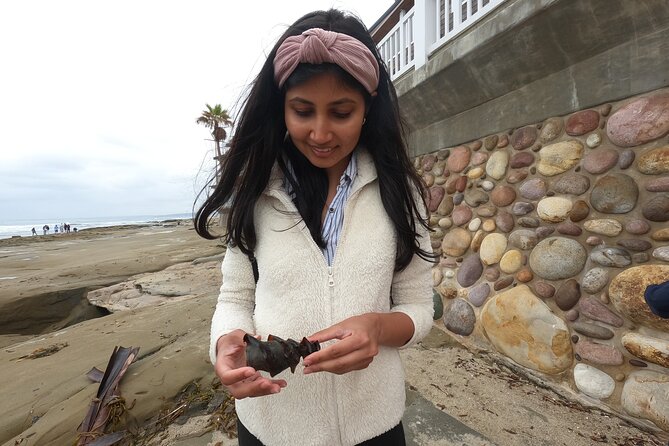
Photography is one of the easy pleasures of the outing. Tide pools offer close views of unusual shapes, colors, shells, and textures, so bring a phone or camera if you like taking pictures.
You also receive a digital photo album. That is a useful extra because small marine animals do not always photograph well in a quick phone snapshot, especially when you are trying to keep your footing. The album gives you a record of the experience and the species you encountered.
The more lasting souvenir, though, is the ability to explore with better judgment. By the end, you should have a clearer idea of where to look, how to move around the pools, and why the no-collection rule matters.
That makes this more than a short wildlife stop. It gives you a method you can use later. You can return to a tide pool on your own and observe with greater care, even though future conditions and sightings will vary.
Is $32 a fair price?
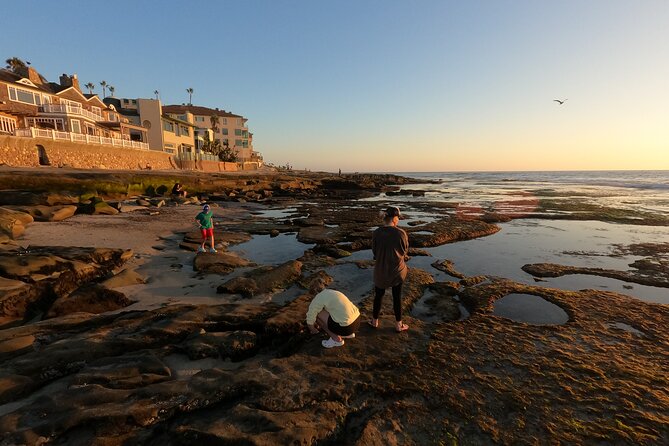
At $32 per person, the tour is fairly priced for a one-hour guided nature activity. You are paying for a specialist guide, a planned introduction to the habitat, a small group capped at 15, and a digital photo album.
The value is strongest for first-time tide pool visitors and families. A guide can save you from spending an hour looking at rocks without understanding what is there. Children also receive a structured outdoor activity that mixes movement, wildlife, and science.
People who already know La Jolla’s tide pools may still find the price worthwhile if they want help spotting less obvious life or want a better understanding of the ecosystem. The value is less clear if you only want a quick look at the shore and do not care about identification or explanation.
The one-hour length keeps the cost and time commitment modest. It also means the activity is not an all-day nature program. If you want a long, detailed field study, this will feel brief. For a family vacation schedule, that compact timing is often an advantage.
Who should book this La Jolla tide pool tour?
I would recommend it most strongly to families with children, first-time tide pool visitors, curious adults, and anyone who wants to learn how to explore without harming marine life.
It is also a good pick for mixed groups. Grandparents, parents, and children can take part together, and Matt’s teaching style allows him to speak at different levels. Children who ask many questions are likely to get the most from it.
The tour may be less suitable if you dislike wet shoes, uneven rocks, or group activities. It is also not the right choice if you expect to collect shells or touch animals. The rules are part of the experience, not an optional extra.
Book ahead if your schedule is fixed. The activity is booked an average of 20 days in advance, suggesting that popular dates can fill before a last-minute visit. You receive confirmation at booking unless you reserve within 12 hours, in which case confirmation arrives as soon as possible and depends on availability.
Free cancellation is available up to 24 hours before the start time for a full refund. Cancellations or changes inside that window are not refunded or accepted.
Should you book it?
Book this tour if you want La Jolla’s tide pools to make sense, not just look pretty. Matt’s marine biology and teaching background add real value, especially when children are involved, and the small group gives you room to ask questions.
The strongest reason to go is the combination of wildlife spotting and conservation guidance. You learn what to look for while being shown how to leave the habitat intact. Bring secure water-friendly shoes, dress for a breeze, and expect a short outing with plenty to notice.
Skip it only if you prefer to explore alone, cannot manage wet uneven rock, or want a longer excursion. For $32 and one hour, this is a practical, family-friendly introduction to one of La Jolla’s most interesting coastal habitats.
FAQ
Where does the tide pool tour meet?
The tour starts at 333 Coast S Boulevard, La Jolla, California 92037, USA. It ends back at the same meeting point.
How long does the experience last?
The activity lasts approximately one hour.
How much does the tour cost?
The listed price is $32 per person.
What shoes should I wear?
You must wear closed-toe shoes or strapped sandals that can get wet. Comfortable, rock-friendly footwear is important because the route includes wet and uneven areas.
Can I touch or collect marine life?
No. The tour follows a strict no-collection policy, and living animals are left alone. You should not interfere with, touch, or handle living marine life.
Is the tour suitable for children?
Yes. The tour is designed for children and adults, and most people can participate. Matt’s teaching style accommodates different ages, including young children.
What happens if the weather is poor?
The activity requires good weather. If it is canceled because of poor conditions, you are offered a different date or a full refund.
Just added around La Jolla
- Two Hour Kayak and Snorkel Tour for Two in La Jolla★ 4.5 · 34 reviews
- Ultimate La Jolla Self-Guided Driving & Walking Audio Tour Bundle★ 3.5 · 9 reviews
- The Mount Soledad E-Bike Tour★ 5.0 · 4 reviews
- Sunset Electric Bike Tour of La Jolla★ 5.0 · 10 reviews
- 1.5 Hour Walking Tour from La Jolla in San Diego★ 4.0 · 7 reviews
- San Diego Bay 1.5-Hour Guided Kayak Tour in Coronado★ 4.0 · 7 reviews
- La Jolla Snorkel with the Leopard Sharks★ 3.0 · 27 reviews
- La Jolla Segway Tour★ 4.5 · 16 reviews
San Diego Snorkeling Tours, compared.
Snorkel San Diego’s Mission Bay with a Marine Biologist
Read our review →
Browse the lists this tour appears in